REVIEW · ISTANBUL
Bosphorus Night Cruise on the Luxury Yacht
Book on Viator →Operated by Bosphorus Tour Organisations · Bookable on Viator
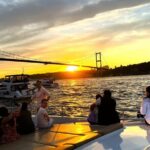
The Bosphorus at night is pure Istanbul magic. This 2-hour luxury yacht cruise turns the strait into a moving viewpoint of Asia-meets-Europe landmarks—palaces, forts, and major bridges—set to sunset and city lights.
What I like most: you get big-name scenery without museum lines, and the crew runs a friendly, relaxing trip (I’ve seen praise for Aleyna and Süleiman). One thing to keep in mind: this is time on the water, not a sightseeing tour of interiors, and it’s weather-dependent, so cloudy or rough conditions can affect the experience.
In This Review
- Key things to notice before you go
- Why This Bosphorus Night Cruise Works So Well at 2 Hours
- The Route Starts at Ömer Avni and Keeps You Moving
- The Bosphorus Strait at Night: Asia Meets Europe Under One Skyline
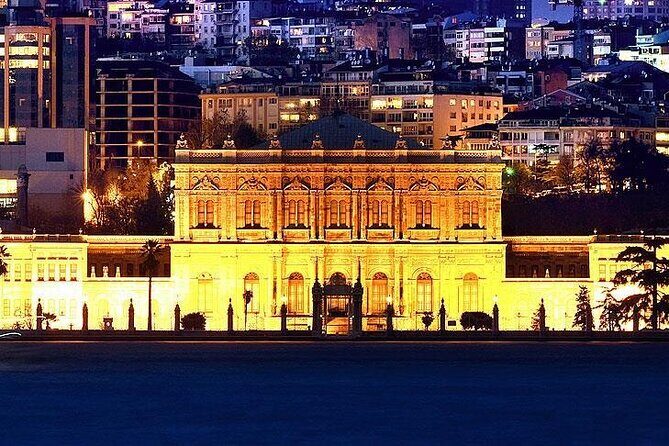
- Dolmabahçe Palace Views From the Water: Grand Ottoman Scale
- Çırağan Palace: Marble, Power, and a Story That Shows Up at Night
- Ortaköy at Night: Cafes, the Bazaar Mood, and the Bridge Connection
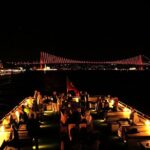
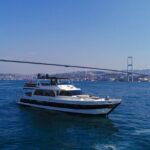
- The Bosphorus Bridge: The First Big Crossing and Its Photo Angle
- Bebek: Ottoman-Era Neighborhood Feel With a Soft, Waterfront Tone
- Rumeli Hisarı (Rumeli Fortress): Fort Walls Built in Just Months
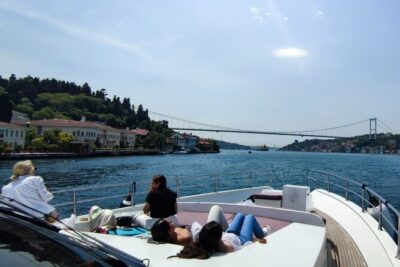
- Fatih Sultan Mehmet Bridge: Skyline Engineering on a Big Scale
- Anadolu Hisarı and the Narrowest-Point Story
- Kucuksu Palace: A Small Summer Palace With a Big View
- Beylerbeyi Palace: Under the Bridge, Styled From East and West
- Maiden’s Tower (Kız Kulesi): The Legend You Can Spot Fast
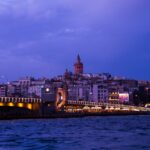
- Galataport: A Modern Port to Close the Evening
- Price, Value, and Who This Cruise Best Fits
- Should You Book This Bosphorus Night Cruise?
- FAQ
- How long is the Bosphorus Night Cruise?
- What does it cost per person?
- Do I need a paper ticket?
- Where is the meeting point?
- How large is the group?
- What if the weather is bad?
Key things to notice before you go
- A focused 2-hour route that still covers major Bosphorus sights
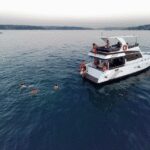
- Luxury yacht + small group (max 25) for a calmer vibe
- Mobile ticket means you can travel light
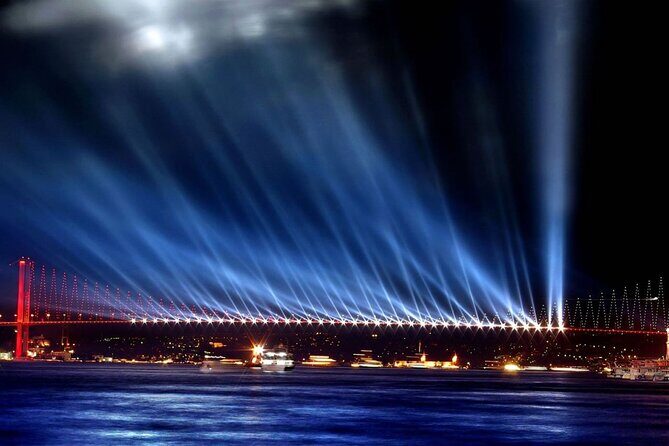
- Night views of palaces and two iconic bridges without changing plans
- Good weather is required, so check conditions close to departure
- Perfect for first-timers who want orientation plus skyline photos fast
Why This Bosphorus Night Cruise Works So Well at 2 Hours
Two hours sounds short until you’re looking across the water and realizing how much Istanbul stacks into one strait. The Bosphorus separates Europe and Anatolia, linking the Sea of Marmara to the Black Sea. On a night cruise, that geography matters: the light hits the shoreline differently, and the skyline feels layered rather than flat.
This format also works for your schedule. You’re not committing to a half-day of walking. Instead, you get a long, moving “viewing window” of Ottoman waterfronts, fort silhouettes, and bridge engineering—especially as the evening darkens.
The price—$60.47 per person—lands in the “worth it if you want views, not chores” category. You’re paying for a premium setting (a luxury yacht) plus a guided-style route that highlights the Bosphorus without you needing to figure out ferries, stops, or transportation transfers.
Other Bosphorus yacht cruises we've reviewed in Istanbul

The Route Starts at Ömer Avni and Keeps You Moving
The meeting point is Ömer Avni, İskele Yolu No:30, Beyoğlu/İstanbul. The good part: it’s described as near public transportation, so you’re not stranded on the edge of town.
Because the activity ends back at the meeting point, you can treat this as a self-contained plan. You arrive, settle in, watch the shoreline change as you move, then return without a complicated “now what?” moment.
Also, with a maximum of 25 people, you’re more likely to get that easygoing cruise feeling instead of a crowded boat where you spend the whole time craning your neck.
The Bosphorus Strait at Night: Asia Meets Europe Under One Skyline
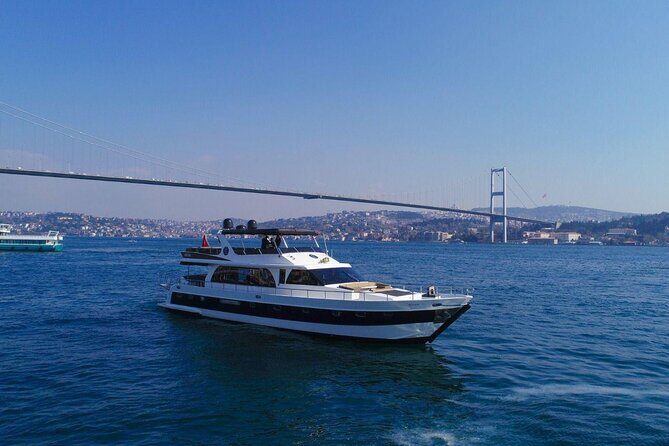
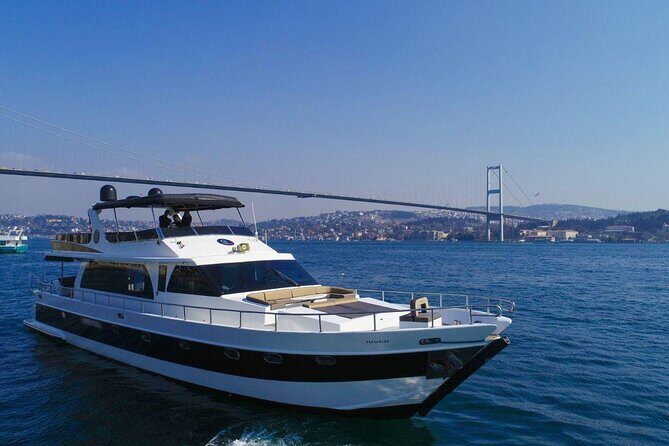
Here’s the big-picture reason the cruise feels special: the Bosphorus isn’t just a canal. It’s an international waterway and a gateway between continents. It runs roughly northeast-southwest, and it naturally divides Istanbul into its European side and its Anatolian side.
You’ll likely notice the depth and scale when you’re out on the water. The strait averages about 60 meters deep, with places reaching up to 120 meters. Width varies depending on where you are—at its widest, it can stretch around 3,500 meters. That means the shorelines don’t feel squeezed together; they feel like they’re part of a bigger stage.
And the currents add a subtle sense of motion that’s part of the charm. Surface currents generally move from the Black Sea toward the Sea of Marmara, while underwater currents go the other way. Even if you don’t track them, you’ll feel the water is alive. On a night cruise, that natural energy makes the whole experience less static and more “alive.”
Dolmabahçe Palace Views From the Water: Grand Ottoman Scale
Dolmabahçe Palace sits along a large waterfront area—about 250,000 square meters—and it’s positioned in Beşiktaş on the European bank at the entrance to the Bosphorus from the Sea of Marmara. The palace’s location matters: you’re not just seeing a building; you’re seeing a statement made at the water’s edge.
As the yacht passes, this is the kind of stop where the architecture reads best from a distance. At night, the palace exterior tends to look especially cinematic because the Bosphorus lighting gives the façade stronger contrast.
One consideration: you’ll get views of the palace and its surroundings, but this cruise isn’t described as an interior visit. If you want room-by-room palace detail, you’ll need a separate day for that. Still, for getting oriented to Istanbul’s most famous waterfront palace zones, this is a smart hit.
Çırağan Palace: Marble, Power, and a Story That Shows Up at Night
Çırağan Palace was commissioned by Sultan Abdulaziz and designed by architect Sarkis Balyan. It sits where a wooden summer palace once stood, and its construction finished in 1871. The scale is massive in a way that’s easy to miss when you’re not on a boat: it spans about 80,000 square meters, and it’s made of marble.
The history connected to this place is intense. After Abdulaziz was deposed, he was imprisoned here with his family. Later, after Murat V was deposed, he was also imprisoned here for years alongside his family. Then came a shift: after the Second Constitutional Monarchy in 1908, it was used as a House of Parliament. A fire in 1910 damaged it.
In the early 1990s, restoration brought it back, and it reopened as a luxury hotel. That matters to you on this cruise because you’re seeing the modern version of a place that used to hold real political drama.
At night, marble often looks extra dramatic. If the lighting is good and the weather holds, Çırağan can become one of your strongest “wow” moments—without you having to buy a separate palace ticket.
Other luxury Bosphorus yacht cruises in Istanbul


Ortaköy at Night: Cafes, the Bazaar Mood, and the Bridge Connection
Ortaköy is one of those Bosphorus neighborhoods where the waterline and the city life mix. It’s on the European side in Beşiktaş and includes Ortaköy and Mecidiye areas. The area is built along slopes that open toward the coast, so views from the Bosphorus naturally frame the neighborhood in layers.
Ortaköy Bazaar is lively throughout the day. It’s known for an “intellectual market” plus souvenir shops, cafes, and bars. There’s one timing detail worth knowing: the market is a bit uninspiring early on, with the movement starting after 10:00 a.m. Since this is a night cruise, you’ll mostly catch the food-and-drink energy rather than the early-morning market vibe.
The Ortaköy moment is also about context. This stop pairs well with what you’ll see next: bridge views that make the Bosphorus feel like a whole transportation system, not just a scenic strip.
The Bosphorus Bridge: The First Big Crossing and Its Photo Angle
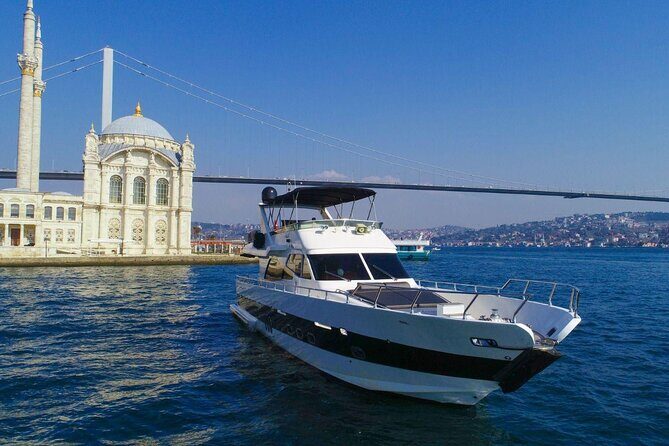
The feet of the Bosphorus Bridge are in Ortaköy (European side) and Beylerbeyi (Anatolian side). This matters because the cruise route is basically built to connect these landmarks visually.
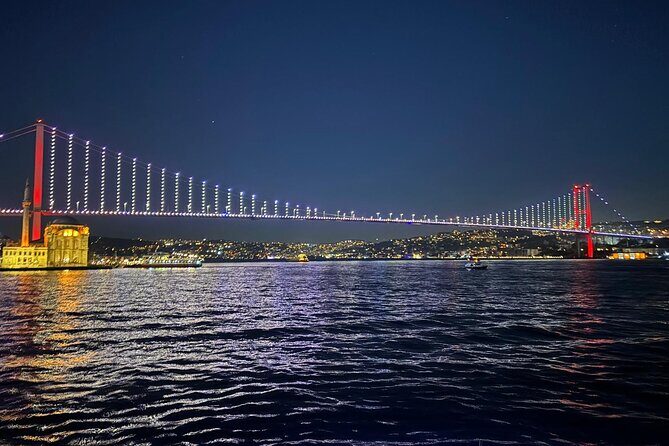
The Bosphorus Bridge was the first bridge built on the strait. Construction began in 1970 and it opened on October 29, 1973, tied to the 50th anniversary of the Republic. It’s a suspension bridge that stays busy all day, and it’s also a recognizable symbol of Istanbul’s skyline.
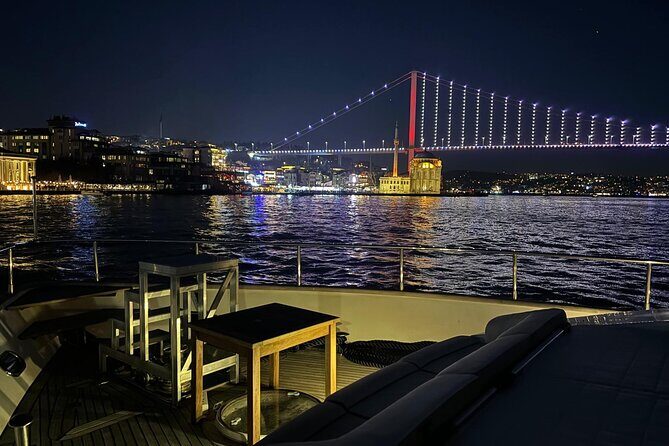
On a night cruise, the key thing you’ll love is timing. As the evening deepens, the bridge’s structure can read more clearly against the dark water and shoreline lights. It’s a different look than you’d get in daylight photos, because the light sources turn the bridge into part of the city’s glowing geometry.
Bebek: Ottoman-Era Neighborhood Feel With a Soft, Waterfront Tone
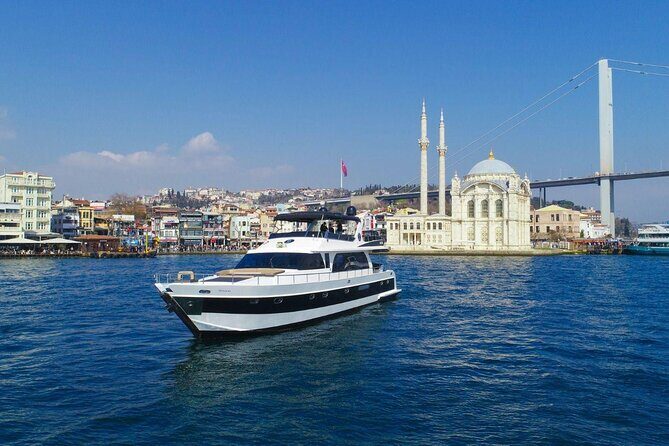
Bebek is a historic neighborhood on the European shores of the Bosphorus, surrounded by Arnavutköy, Etiler, and Rumeli Hisarı. The name Bebek is famously tied to the word baby, reflecting how attractive the neighborhood’s positioning is along the Bosphorus.
Today, Bebek is known for a mix of historic buildings and waterside mansions, plus visible landmarks like Bogaziçi University. On the cruise, this stop tends to feel more residential and relaxed than some of the louder districts. That can be a good break in the route: after palaces, forts, and major bridges, it’s nice to see a calmer shoreline rhythm.
If you’re hoping for nonstop night-party energy, this may not be that vibe. But if you want the Bosphorus to feel like a living city with different moods, Bebek delivers.
Rumeli Hisarı (Rumeli Fortress): Fort Walls Built in Just Months
Rumeli Hisarı sits in Sariyer on the Bosphorus shore. It was built directly across from Anadolu Hisarı, and Sultan Mehmet the Conqueror ordered construction starting in 1453. The fortress was placed at the narrowest point of the Bosphorus for defensive impact, and construction reportedly finished in just three months.
After the conquest, the fortress shifted from naval defense to an inspection point for maritime traffic. Over time, the area inside filled with small wooden houses, but restoration in 1953 removed those houses.
Today, Rumeli Hisarı is closely tied to summer culture. It’s known for concerts, and it serves as an open-air theater and museum. For you on the cruise, the practical value is simple: the fortress gives you a strong sense of the Bosphorus as a historical choke point—strategic, not just pretty.
Night viewing helps here. Forts often look more dramatic in low light, because their silhouettes and stone edges read clearly.
Fatih Sultan Mehmet Bridge: Skyline Engineering on a Big Scale
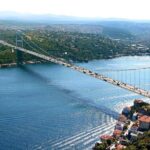
The Fatih Sultan Mehmet Bridge is Istanbul’s second major Bosphorus crossing. It was built between Kavacık and Hisarüstü, with construction starting in 1986 and opening on July 3, 1988.
The bridge is among the largest steel suspension bridges in the world (listed as the 14th largest). It carries a significant portion of trans-Bosphorus traffic along with the Bosphorus Bridge and ferries.
Why this matters on your cruise: bridges are the visual proof that the Bosphorus is both historic and modern. You’re watching a dramatic skyline feature that affects everyday movement, not just a landmark that sits still for tourists.
If you’re the kind of person who loves engineering as much as scenery, this is the stop where the cruise earns its keep.
Anadolu Hisarı and the Narrowest-Point Story
Anadolu Hisarı is on the Asian side in Beykoz, and it’s located at the narrowest point of the Bosphorus. Built in 1395 by Bayezid I, it includes a citadel and exterior castle walls.
After the conquest of Istanbul, it lost much of its strategic importance and became a military hospital. Over time, the surrounding area became settled, so you’ll see waterfront houses and old mansions distributed among the castle ruins.
Restoration took place from 1991 to 1993. Today it functions as an open-air museum, but it’s not described as open to the public in the full way—only outer walls are accessible, and a road passes through the area.
From the cruise, your payoff is the setting. Anadolu Hisarı gives you the other side of the Bosphorus fortress story, so it complements Rumeli Hisarı like two chapters of the same page.
Kucuksu Palace: A Small Summer Palace With a Big View
Kucuksu Palace is located on the Bosphorus coast road between Üsküdar and Beykoz on the Asian side. It’s a small Ottoman summer palace ordered by Sultan Abdulmecit and designed by architect Nikogos Balyan.
The palace is known for its view of the Bosphorus, and during the Ottoman period, sultans reportedly used it for relaxation. In the Republican period, the palace opened as a museum due to the quality of its furniture, paintings, carpets, and delicate details.
On a night cruise, you won’t see every interior feature, but the location does what it needs to: it frames the idea of leisure and retreat along the water. If you like a quieter kind of palace story, Kucuksu is a nice counterpoint to the larger, more politically charged waterfront palaces.
Beylerbeyi Palace: Under the Bridge, Styled From East and West
Beylerbeyi Palace sits on the shores of the Bosphorus in the 1860s and lies right under the Bosphorus bridge. The architect was Sarkis Balyan, the same name you’ll see connected to Çırağan, which gives the cruise a subtle theme: Istanbul’s Ottoman waterfront was planned by designers who understood luxury and power.
The palace complex mixes styles—Renaissance, Baroque, and other influences. It’s a two-store stone construction with a high basement, and it sits on a land area of about 2,500 square meters. The layout includes an imperial mabeyn area and apartments for the Valide Sultan. The complex includes six halls, 24 rooms, plus a hamam and a bathroom.
One highlight you can appreciate even from the cruise viewpoint is the grounds: the palace is known for a lily pond and a large garden. Since those are part of the complex identity, you’re not just looking at a single façade. You’re seeing the idea of a waterfront residence with designed outdoor space.
This stop tends to feel elegant and close to the action, since you’re under the bridge’s visual footprint.
Maiden’s Tower (Kız Kulesi): The Legend You Can Spot Fast
Maiden’s Tower is one of the most recognizable features of the Bosphorus skyline. It sits on a tiny island about 200 meters from the shore of Üsküdar, which is why it shows up clearly in sightlines from the water.
The tower’s legend is the kind you remember. An oracle prophesied that a sultan’s daughter would be killed by a snake bite on her 18th birthday. The sultan tried to protect her by having a tower built in the middle of the Bosphorus, where she lived in secrecy. On her birthday, she was sent a basket of fruits with a hidden snake inside. She was bitten and died in her father’s arms.
Whether you come for the legend or just the photo, this is a quick, strong payoff stop. At night, the tower’s silhouette is especially easy to pick out because it’s isolated by water and framed by the shoreline glow.
Galataport: A Modern Port to Close the Evening
The cruise finishes around Galataport in Karaköy, a modern port and social hub. It’s described as blending Istanbul’s historical charm with contemporary architecture. You’ll find restaurants, cafes, shops, and cultural venues here, plus an underground terminal designed to handle cruise ship traffic efficiently.
Why end here? It gives your night a natural “landing” feeling. You’re not walking into another transit puzzle—you’re wrapping up in a place built for people, with lots of services close by.
It’s a good final impression too. Istanbul isn’t only palaces and forts. It’s the modern port world that now sits beside those old waterways.
Price, Value, and Who This Cruise Best Fits
At $60.47 per person for about two hours, this cruise is best viewed as skyline access with a premium boat and a guided-style highlight route. You’re paying for:
- Time efficiency: you see major sights in one plan
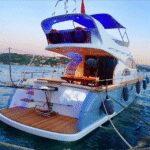
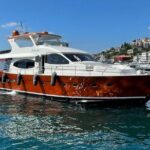
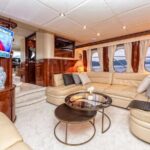
- Comfort factor: a luxury yacht experience, not a cramped ferry
- Small-group feel: max 25 people
- Night timing: bridges, palaces, and fort silhouettes often look better with city lights
It also helps if you’re traveling with mixed interests. If someone wants architecture and history, they get Ottoman palace and fortress context. If someone just wants photos and relaxation, the cruise does that too.
Who might skip? If you specifically want hands-on museum time or want to tour interiors, you’ll likely feel the stop format is mostly about views from the water. This is more about watching the Bosphorus than walking into rooms.
Should You Book This Bosphorus Night Cruise?
Yes—if you want a high-impact Istanbul night plan that’s easy to fit into your schedule. Book it if you like skyline photos, bridge views, and short, story-guided sightseeing that doesn’t require a full day of walking.
I’d especially consider booking sooner rather than last minute, since it’s commonly reserved about a month ahead and good weather is required. If your schedule is flexible and you enjoy the water, this is the kind of experience that makes Istanbul feel like a single connected place—Europe and Anatolia moving together under night lights.
FAQ
How long is the Bosphorus Night Cruise?
The cruise lasts about 2 hours.
What does it cost per person?
The price is $60.47 per person.
Do I need a paper ticket?
No. You’ll receive a mobile ticket.
Where is the meeting point?
You meet at Ömer Avni, İskele Yolu No:30, 34427 Beyoğlu/İstanbul, Türkiye, and the tour ends back at the meeting point.
How large is the group?
The tour has a maximum of 25 travelers.
What if the weather is bad?
This experience requires good weather. If it’s canceled due to poor weather, you’ll be offered a different date or a full refund.
You Might Also Enjoy
More Tour Reviews in Istanbul



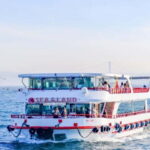
More Luxury Yacht Cruises on the Bosphorus & Istanbul
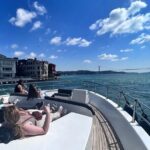
More Yacht Cruises on the Bosphorus & Istanbul
- Bosphorus Yacht Cruise with Stopover on the Asian Side – (Morning or Afternoon)
★ 5.0 · 1,657 reviews