REVIEW · ISTANBUL
Private Yacht Cruise on Bosphorus
Book on Viator →Operated by Golden City Tours · Bookable on Viator
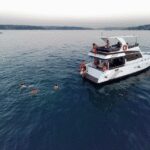
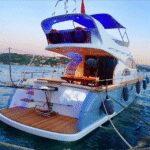
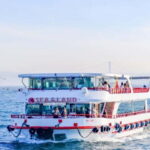
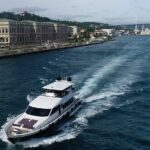
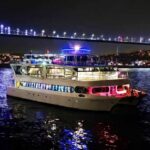
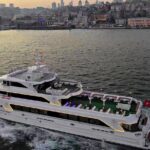
Two hours, and Istanbul feels close. I love the private yacht glide past iconic palaces and bridges, and I like that you get Wi‑Fi so you can share the views right there on the water. The main drawback is motion: it’s not recommended if you get sea sick or have vertigo.
This cruise is built for comfort and easy sightseeing at once. You’ll have a professional local guide onboard, and the vibe from guides named in recent outings like Betül, Erol, Nur, Erik, and Erbem is consistent: friendly, organized, and ready to explain what you’re seeing as the coastline rolls by. You’ll also have proper small comforts on board, including a restroom and complimentary drinks.
Value is strong when you book as a group. The price is per group (up to 12), so your cost can work out very well compared with paying per person for a short, guided waterfront experience—just note hotel transfers aren’t included, so you’ll handle getting to the departure area.
In This Review
- Key things to know before you sail the Bosphorus
- Why this Bosphorus yacht cruise feels different from a normal sightseeing day
- How the 2-hour route strings Istanbul’s best shoreline landmarks together
- Dolmabahçe Palace from the water: European-style grandeur in plain view
- Çırağan Palace and the Kempinski connection: marble elegance, then luxury hotel life
- Ortaköy and the Bosphorus Bridge: where the coast turns social
- Bebek and Rumeli Hisarı: upscale shoreline plus fortress power at the narrowest point
- The Fatih Sultan Mehmet Bridge: modern Istanbul’s skyline marker
- Anadolu Hisarı and Kucuksu Palace: quieter ruins and a sultan’s retreat
- Beylerbeyi Palace under the bridge: gardens, ponds, and imperial apartments
- Galata Bridge and Galata Tower views: Golden Horn energy from the water
- On-board food, drinks, and the small comforts that make it worth your time
- Wi‑Fi onboard: practical for sharing, useful for planning your next move
- Price and value: $366.52 per group can be a sweet deal
- Who should book this cruise, and who should skip it
- Should you book this Bosphorus yacht cruise?
- FAQ
- How long is the cruise on the Bosphorus?
- What’s included in the price?
- Are alcoholic drinks included?
- Is Wi‑Fi available during the cruise?
- Is this a private tour or shared experience?
- Which landmarks will we see while cruising?
- What if the weather is poor?
- Is the cruise suitable if I get sea sick?
Key things to know before you sail the Bosphorus
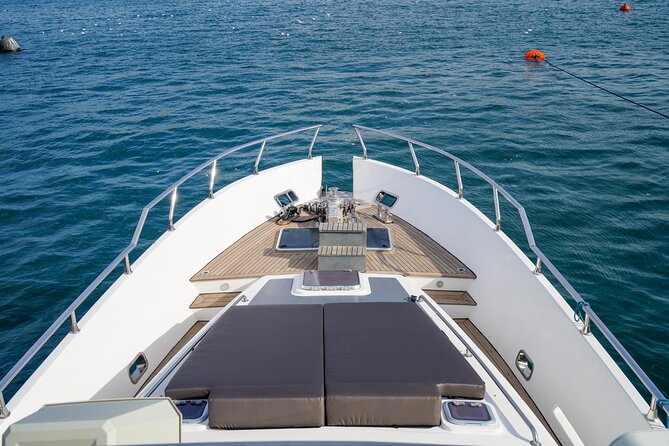
- Private, up-to-12 group setup: It’s not a cattle-call cruise, and you stay with your own group.
- Guided landmark spotting: You’ll learn what you’re passing, not just stare at it.
- Complimentary drinks + snacks: Homemade lemonade with fresh mint, tea/coffee, and a fruit/cookies/baklava mix.
- Wi‑Fi onboard: Useful for photos, maps, and posting while you’re still on the water.
- Two-hour timing: Enough time to see a lot without turning it into a half-day slog.
Why this Bosphorus yacht cruise feels different from a normal sightseeing day
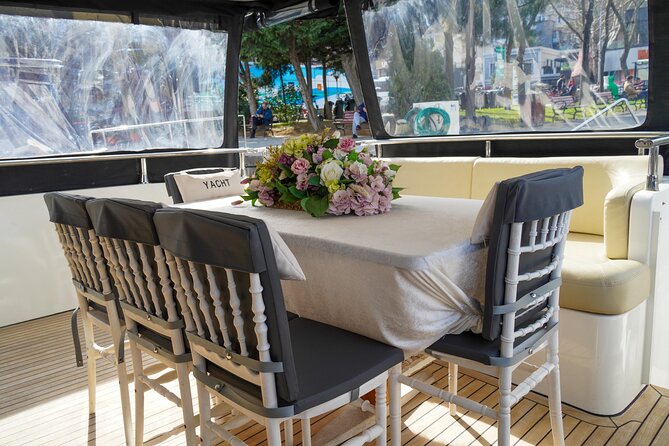
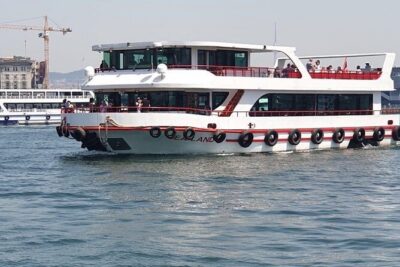
The Bosphorus is famous for a reason, but most day plans in Istanbul turn into a stop-and-go scramble. This one is simpler: you’re cruising for about 2 hours, and the city comes to you in an orderly line—palaces, mosques, fortresses, and bridges, all from the same moving viewpoint.
I also like the balance of comfort and information. You’re not stuck only on a commentary track. You get a guide’s explanations while you can still take breaks to watch the shorelines drift by, sip lemonade, and snack without thinking about lunch logistics.
One practical note: this isn’t a good fit if you’re very sensitive to movement. The experience is a boat ride, so keep that in mind even if you’re generally fine on ferries.
If you're still narrowing it down, here are other tours in Istanbul we've reviewed.

How the 2-hour route strings Istanbul’s best shoreline landmarks together
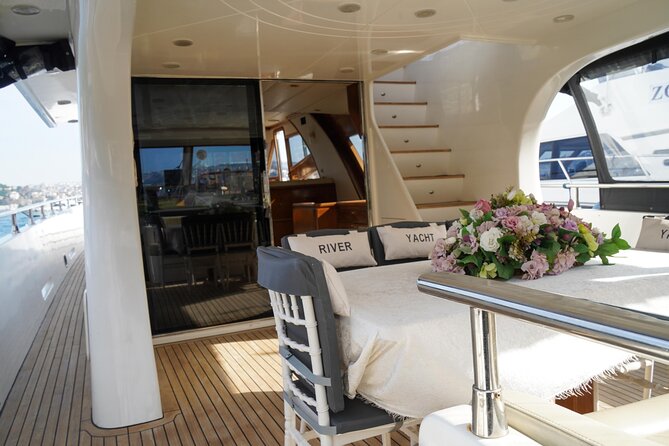
Your cruise follows the Bosphorus Strait long enough to connect the European and Asian sides visually. Expect big-name sights that sit along the water in a way you can’t fully recreate from street-level.
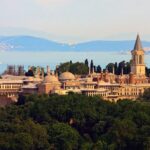
As you sail, the guide helps you identify what you’re seeing—Dolmabahçe Palace, Çırağan Palace, Beylerbeyi Palace, Çamlıca Mosque, Ortaköy Mosque, plus landmarks like the Maiden’s Tower, the Bosphorus Bridges, and the Rumeli and Anadolu Fortresses. You’ll also pass Ottoman-style pavilions, waterfront villas, and the kind of shoreline development that makes Istanbul feel built in layers.
This is where a yacht beats a bus tour: the Bosphorus is a long, linear stage. From the boat, you get the “in-between” view—the coast that links everything—so the palaces and fortresses feel like part of one story instead of separate checklist items.
Dolmabahçe Palace from the water: European-style grandeur in plain view
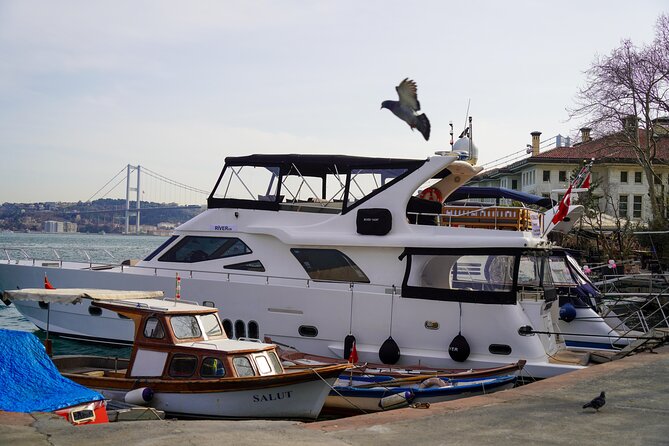
Dolmabahçe is one of those Istanbul landmarks that can feel confusing from photos. From the water, it reads as a real, physical statement on the shoreline—especially because you’re cruising right alongside the palace’s location.
You’ll learn that it was built between 1843 and 1856 by Karabet Balyan, the court architect of Sultan Abdulmecid. The palace is known for blending multiple European architectural styles, and that mix shows in the symmetry and the grand scale. It has 285 rooms and 43 halls, and the best part for your eyes is how much of it has survived with original decoration and furnishings, including silk carpets and curtains.
Even if you don’t go inside on this cruise, you’ll still get the key payoff: the sense of wealth and control that comes from seeing that kind of residence directly on the water.
Çırağan Palace and the Kempinski connection: marble elegance, then luxury hotel life
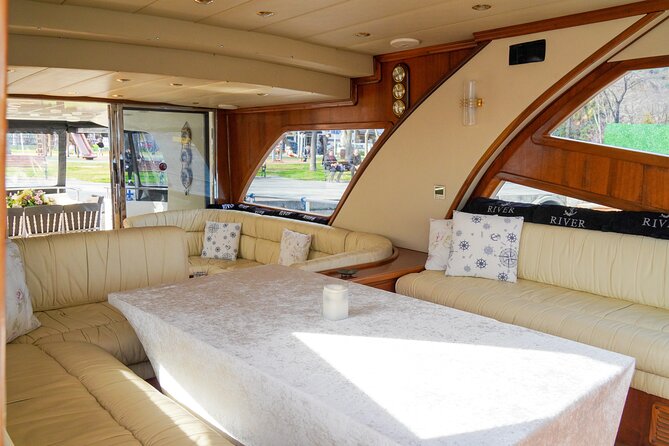
Çırağan Palace sits in the same Bosphorus spotlight as Dolmabahçe, but it’s a different kind of grandeur. The cruise helps you connect why it mattered historically and what it became later.
You’ll hear that it was commissioned by Sultan Abdulaziz and designed by Sarkis Balyan. Construction finished in 1871, and the palace is described as being made of marble and spread over a total area of 80,000 square meters. The story behind it matters too: it replaced a former wooden summer palace area that also saw destruction during construction.
Today, Çırağan has been converted into a luxury hotel under Kempinski. That shift is useful to know before you see it, because it explains why the building still feels so present in modern Istanbul. You’re looking at a landmark that didn’t disappear—it got repurposed.
Ortaköy and the Bosphorus Bridge: where the coast turns social
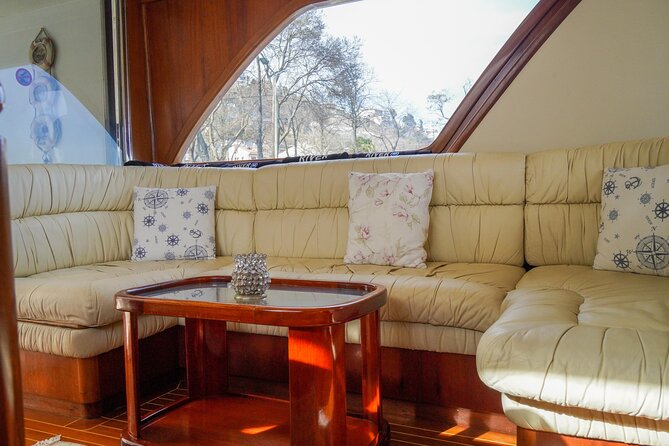
Ortaköy is the kind of neighborhood you can understand quickly from the water. You’ll see how the shoreline is shaped into small slopes and openings toward the coast—then you’ll get context for the neighborhood’s day-to-day life.
Ortaköy’s bazaar is described as lively across the day, with an intellectual market feel, souvenir shops, cafes, bars, and restaurants. A useful timing detail: early morning is said to feel less exciting, and movement starts after 10:00 am. So if you ever plan to pair this cruise with a stroll later, aim for later in the day.
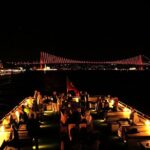
This is also where the Bosphorus Bridge comes into the picture. You’ll see it because its feet are located in Ortaköy on the European side (and Beylerbeyi on the Asian side). The bridge is presented as the first suspension bridge on the Bosphorus, and it’s described as the first bridge connecting Europe to Asia.
From the yacht, it’s not just a landmark—it’s a scale reference. It helps you gauge the distance between viewpoints and makes the Bosphorus feel even more like a real corridor between continents.


Bebek and Rumeli Hisarı: upscale shoreline plus fortress power at the narrowest point
Bebek is an easy win for a water view. The cruise gives you the sense of a residential waterfront with history, not just a tourist strip. You’ll also hear that the name translates to baby, tying to the neighborhood’s positioning along the Bosphorus.
The context you get includes Ottoman-era roots and the modern feel that followed. Today it’s associated with waterside mansions, Bogazici University, and lots of good Bosphorus-view dining. The description you’re given even frames it as the Beverly Hills of Istanbul—so mentally, think sleek waterfront and high-end calm rather than old-market chaos.
Then the cruise swings toward Rumeli Hisarı (Rumeli Fortress). This is one of the most dramatic “power point” stops on the Bosphorus. You’ll learn it was built directly across from Anadolu Hisarı at the narrowest section of the strait, with construction starting in 1453 by Sultan Mehmet the Conqueror. The build is described as astonishingly fast—completed in about three months.
Historically, Rumeli Hisarı was meant to protect against naval attacks. After the conquest of Istanbul, it became an inspection point for maritime traffic. Now, you’re told it serves as an open-air theater and museum—so it’s not only ruins and walls; it has a current-life use, which makes it easier to picture beyond “it was built long ago.”
The Fatih Sultan Mehmet Bridge: modern Istanbul’s skyline marker
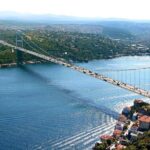
The Fatih Sultan Mehmet Bridge adds a very different mood compared to fortress walls and palace façades. You’ll see it as a major steel suspension bridge—construction began in 1986 and it opened on July 3, 1988.
You’ll also get scale context: it’s described as the 14th largest steel suspension bridge in the world. In practice, what you’ll feel on the yacht is how it dominates the skyline and how it carries a significant portion of cross-Bosphorus traffic, alongside the Bosphorus Bridge and ferries.
From a visitor point of view, this bridge is useful because it anchors the idea that Istanbul’s identity isn’t only Ottoman and Byzantine. It’s also infrastructure and modern movement—visible the whole time you cruise.
Anadolu Hisarı and Kucuksu Palace: quieter ruins and a sultan’s retreat
On the Anatolian side, you’ll see the Anadolu Hisarı fortress complex at the narrowest point of the Bosphorus. You’ll learn it was built in 1395 by Beyazid I, and it consists of a citadel and exterior castle walls.
The useful context for your imagination: after the Ottoman conquest, it lost much of its strategic importance. Over time, the site was converted into a military hospital. Later, restoration work in 1991–1993 helped turn it into an open-air museum, though the information says it is not open to the public in full—outer walls can be visited and the road passes just through the area.
That limitation matters when you’re planning photo angles or how you think you’ll explore. On the cruise itself, you’re mostly reading the site from the boat, but knowing what’s visitable can prevent disappointment if you later try to plan a land stop.
Between that and the next viewpoint, there’s Kucuksu Palace. It’s a small Ottoman summer palace ordered by Sultan Abdulmecit and designed by architect Nikogos Balyan. The key detail I’d take from the information is that it was valued for its excellent Bosphorus view, and it attracted many sultans for relaxation. In the Republican period, it was opened as a museum.
This pairing gives you contrast: big defensive architecture on one side, then a more personal “summer retreat” mood nearby.
Beylerbeyi Palace under the bridge: gardens, ponds, and imperial apartments
Beylerbeyi Palace is a strong reason to do this cruise because it sits right under the Bosphorus Bridge. That location makes it visually dramatic even from a distance.
The palace is described as an Ottoman summer palace complex built in the 1860s, designed by Sarkis Balyan. You’ll hear it mixes Renaissance, Baroque, and Eastern and Western styles. The building is described as two-store stone construction on a high basement, covering about 2,500 square meters of land, with 6 halls and 24 rooms, plus a hamam and a bathroom.
The guide context also divides the palace into the Imperial Mabeyn (south side) and the Valide Sultan’s Apartment (north side). Even if you don’t enter, that map in your head helps you understand the layout rather than just seeing a single façade.
Don’t miss the garden story either. The palace is noted for a lily pond and a large garden, which is great context if you ever visit later. You’ll get a sense that the palace wasn’t only for rooms—it was built around scenery and water.
Galata Bridge and Galata Tower views: Golden Horn energy from the water
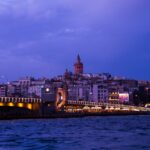
The cruise route also connects you to the Golden Horn area through the skyline view of Galata Bridge and Galata Tower, plus the modern waterfront zone at Galataport Istanbul.
Galata Bridge’s history you’ll hear starts in 1845. It spans the two sides of the Golden Horn and has changed forms over time. The timeline includes damage by fire in 1992 and the replacement of the bridge that followed. The older bridge is said to have been moved to Halic.
What makes Galata Bridge feel real on the cruise is how it functions like a daily stage. The information says there are restaurants, cafes, and hookah lounges below, while the tramway and pedestrian traffic pass above. From the boat, you get a view of daily life rather than only monumental buildings.
Then comes Galata Tower. You’ll be told it was built by the Genoese in 1348, reaching 66.90 meters and once being the tallest building in the city. In Ottoman times, it served as a fire observatory and a jail. There’s even a story: in 1632, Hezarfen Ahmet Celebi allegedly glided from the top of the tower across the Bosphorus to Uskudar using self-constructed wings.
The tower’s later shape is also explained: its conic roof was destroyed by a storm in 1875, and the cap was restored in the 1960s. Wooden interiors were replaced by concrete afterward. Today it’s open to the public with a restaurant and cafe on the upper floor, and it’s described as a top spot for a panoramic view.
Finally, Galataport Istanbul is presented as a modern lifestyle destination on the Karaköy waterfront—cruise port, shopping areas, restaurants, cultural venues, and restored historical buildings along a newly opened coastline. The overall effect is “old + new” visible side by side.
On-board food, drinks, and the small comforts that make it worth your time
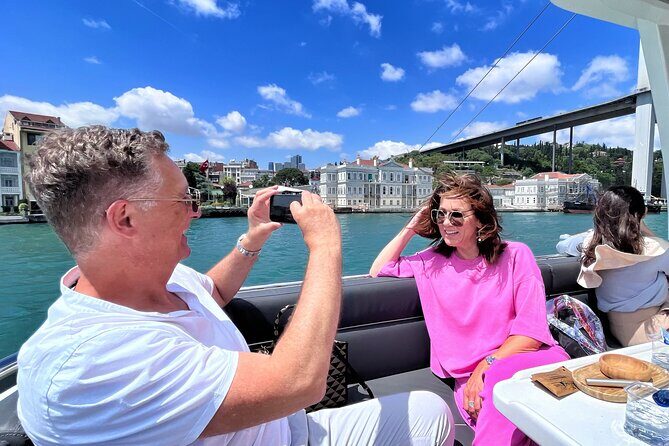
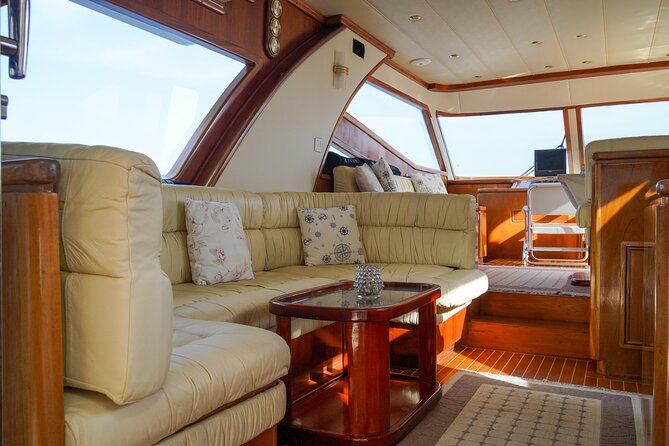
This cruise is unusually good about basic comfort for such a short trip. Complimentary drinks include homemade lemonade with fresh mint, water, tea, and coffee. Food is also thoughtfully handled for a 2-hour window: you get a daily prepared fresh seasonal fruits plate, plus cookies and baklava served aboard.
One of the most consistent positive notes is that the snacks taste good and keep you satisfied without turning it into a meal event. In the feedback linked to real guide names, people also highlight tea and juice as being part of the win, not an afterthought.
Restroom access matters, too. On shorter cruises, it’s easy to skip for most people until you need it—having one on board makes the trip feel more relaxed.
Also, one small comfort that came up is blankets being provided when conditions called for it. If you sail near sunset or on a breezier day, it’s a good sign they plan for comfort, not just sightseeing.
Wi‑Fi onboard: practical for sharing, useful for planning your next move
Wi‑Fi being included isn’t just about social media. It helps you do the quick stuff that makes Istanbul click faster. You can look up what you’re seeing while it’s still in front of you, share the location with your group, and keep maps from draining your battery.
This matters because the cruise passes a lot of landmarks that are easy to mix up later if you rely only on memory. Real-time access lets you label photos while everything is fresh.
Price and value: $366.52 per group can be a sweet deal
At $366.52 per group (up to 12 people), this yacht cruise can be surprisingly cost-effective if you actually fill the boat with your own group. Here’s the basic math: if you’re close to 12, your per-person cost can drop well below typical per-ticket pricing you might see for guided sights.
And because the cruise is private, you’re not paying for time wasted waiting for strangers. You also get a professional local guide onboard, plus drinks and snacks included. Alcoholic beverages are not included, so if your group wants cocktails, you’ll need to plan that separately.
The absence of hotel transfers is the one pricing catch to remember. If you’re staying somewhere with easy public transport access, that’s not a big deal. If you’re not, factor in how you’ll reach the departure point.
Who should book this cruise, and who should skip it
Book it if you want a short, guided Bosphorus experience that feels comfortable and includes food and drinks. It’s a good match for:
- Couples or small families who want landmark views without walking a lot
- Friends who can split the group price up to 12
- People who like structure: seeing sights in sequence with explanations
Skip it if you have strong sea sickness sensitivity or vertigo. The boat ride is central to the experience, so it’s not a “sit still on land” situation.
It also fits best when you want to spend a couple of hours on the water and keep the rest of the day open for neighborhoods—especially since you’ll already get major anchors like Ortaköy, Bebek, and the bridges in one shot.
Should you book this Bosphorus yacht cruise?
I’d book it if you value three things: comfort, clear explanations, and payoff per hour. This is the kind of outing where the guide helps you connect palaces, mosques, forts, and bridges into one coherent Bosphorus story, and you get snacks and lemonade while you do it. The Wi‑Fi is a smart extra for Istanbul, where you’ll want to confirm what you’re seeing and share it quickly.
If you’re prone to motion sickness, or your group can’t easily get to the departure area without a transfer, you may want a different Bosphorus plan. But for most people, especially groups that can split the cost, this is a strong value way to see Istanbul from its most iconic angle.
FAQ
How long is the cruise on the Bosphorus?
It’s about 2 hours.
What’s included in the price?
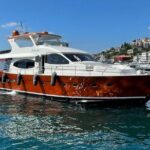
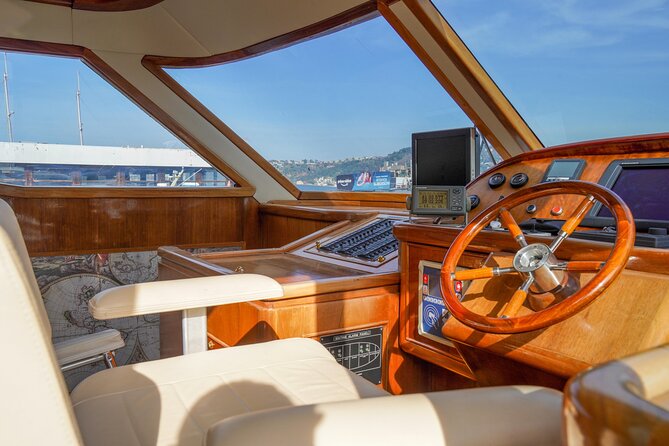
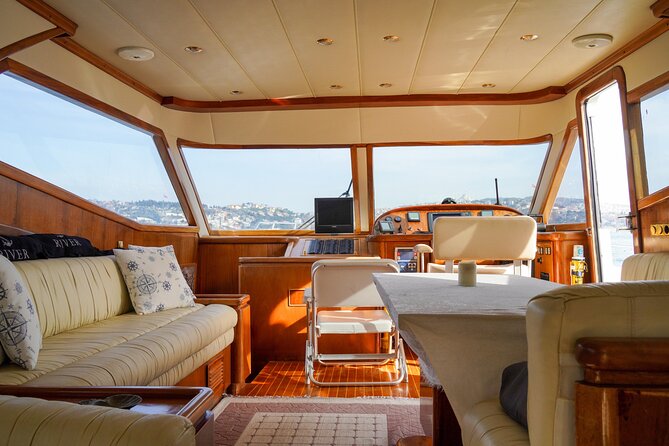
A 2-hour luxury yacht cruise, complimentary drinks (homemade lemonade with fresh mint, water, tea, and coffee), snacks (fresh seasonal fruits plate, cookies, and baklava), a restroom on the boat, and a professional local guide.
Are alcoholic drinks included?
No. Alcoholic beverages are not included.
Is Wi‑Fi available during the cruise?
Yes, Wi‑Fi is available onboard.
Is this a private tour or shared experience?
This is a private tour/activity. Only your group participates.
Which landmarks will we see while cruising?
You’ll see views along the Bosphorus including Dolmabahçe Palace, Çırağan Palace, Beylerbeyi Palace, Çamlıca Mosque, Ortaköy Mosque, the Maiden’s Tower, the Bosphorus Bridges, Rumeli and Anadolu Fortresses, and also see Galata Bridge, Galata Tower, and Galataport Istanbul as part of the route.
What if the weather is poor?
The experience requires good weather. If it’s canceled due to poor weather, you’ll be offered a different date or a full refund.
Is the cruise suitable if I get sea sick?
It’s not recommended for travelers with sea sickness and vertigo. Most other people can participate.