REVIEW · ISTANBUL
Bosphorus Night Cruise with Luxury Yacht
Book on Viator →Operated by Tour Book Turkey · Bookable on Viator
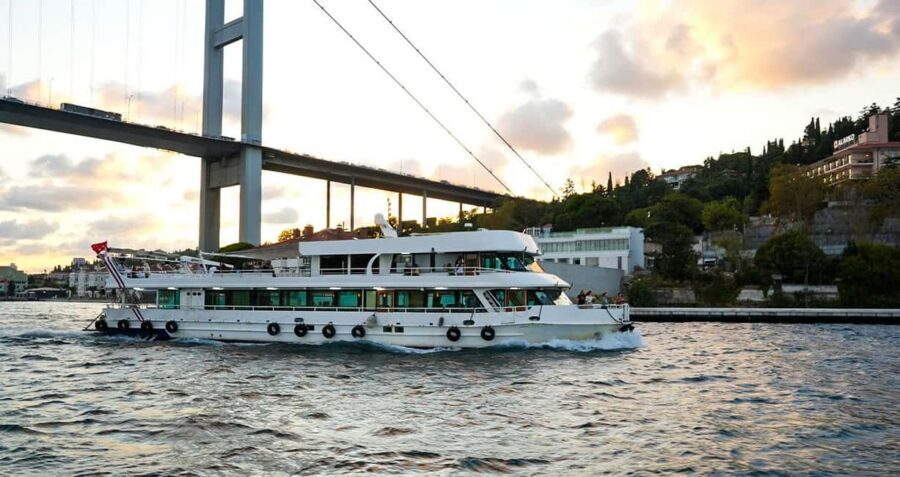
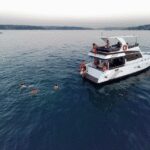
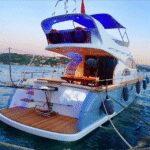
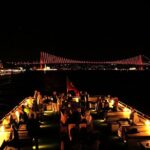
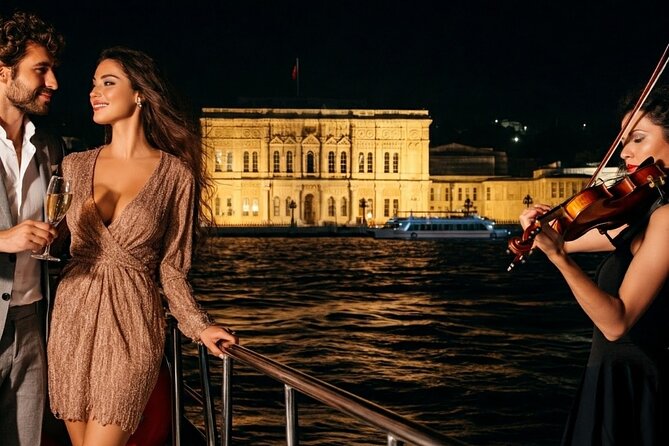
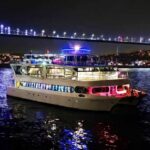
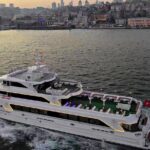
The Bosphorus looks unreal after dark. This two-hour luxury yacht cruise turns Istanbul into a moving lightscape, with bridges and waterfront palaces sliding by in the Bosphorus night views you can’t fake from land. I like that the night pace is relaxed, and the guide team (including Ozzie and Aleyna) keeps the story clear as you pass the big landmarks.
I also love the practical comfort here: small-group size (max 30), smooth sailing, and refreshments plus some food so you’re not stuck just staring. One possible drawback: the tour needs good weather, so if conditions are poor you’ll have to go with a different date or get a refund.
In This Review
- Key highlights to know before you go
- Istanbul’s Bosphorus at Night: Why This Feels Worth It
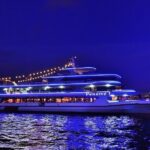
- Getting on the Luxury Yacht at Ömer Avni Pier
- Bosphorus Strait Highlights: Asia-Europe Views Plus Real Geography
- Dolmabahçe Palace and Çırağan Palace: Ottoman Grandeur From the Water
- Ortaköy, the Bosphorus Bridge, and the Night Photo Circuit
- Bebek to Rumeli Hisarı: Mansions and a Fortress Built for War
- Fatih Sultan Mehmet Bridge and Anadolu Hisarı: Two Crossings, One Big Sky
- Küçüksu, Beylerbeyi, and Maiden’s Tower: Palaces Plus Legend
- Galataport and the Modern Port Finish in Karaköy
- Price, Included Drinks/Snacks, and the Two-Hour Pacing Value
- Should You Book This Bosphorus Night Cruise?
- FAQ
- How long is the Bosphorus night cruise on the luxury yacht?
- What does it cost per person?
- Where does the tour start and does it end nearby?
- Will I receive a mobile ticket?
- Are drinks, snacks, or food included?
- What if weather is bad or I need to cancel?
Key highlights to know before you go
- A compact two-hour itinerary focused on the highlights from the water
- Small groups capped at 30, so the yacht doesn’t feel like a cattle boat
- Ozzie and Aleyna style guidance that ties geography to what you’re seeing
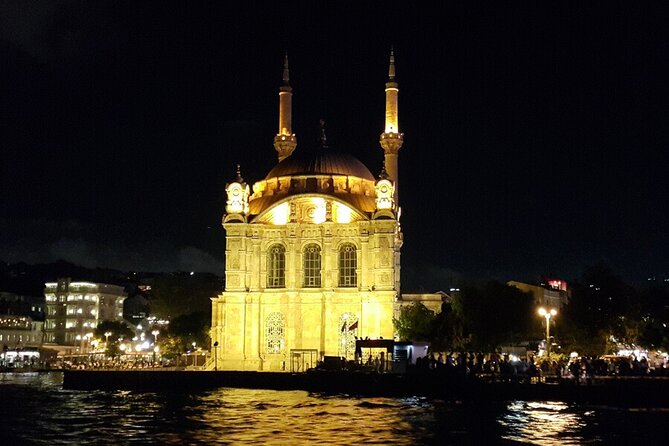
- Big Istanbul landmarks after dark, including multiple palaces, forts, and bridges
- Included drinks and snacks (plus some food), which makes the night cruise feel complete
Istanbul’s Bosphorus at Night: Why This Feels Worth It
If you’ve seen Istanbul from viewpoints, you’ve already noticed the problem: everything looks impressive, but it’s hard to connect it all. From the water, the pieces line up. You get the Bosphorus straight through the frame, with Istanbul’s skyline stretching along both banks of the strait.
The Bosphorus is more than a pretty channel. It’s an international waterway separating Europe and Asia, connecting the Sea of Marmara and the Black Sea. And it isn’t shallow either: the average depth is about 60 meters, dropping to around 120 meters at the deepest point. That matters because it explains why so many monumental buildings face the waterfront so confidently.
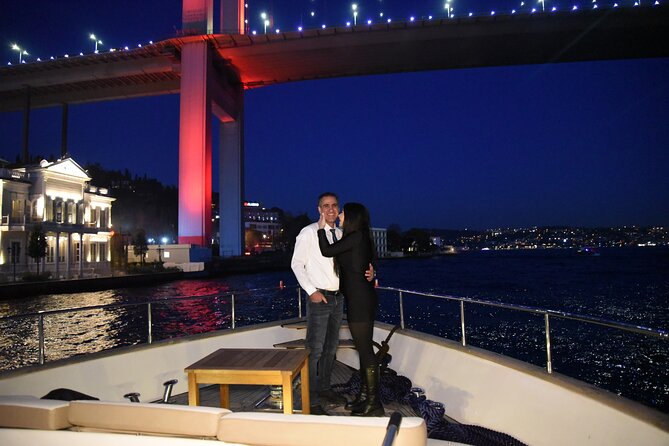
Night makes it better. Lights reflect off the water and you see the city as a chain of signals: palace silhouettes, bridge lines, and the glow of waterfront neighborhoods. For me, this is one of the most efficient ways to get that “I get it now” feeling about Istanbul without spending hours hopping between stops.
If you're still narrowing it down, here are other tours in Istanbul we've reviewed.

Getting on the Luxury Yacht at Ömer Avni Pier
Your meeting point is Ömer Avni, İskele Yolu No:30, in Beyoğlu. The good news is that it’s near public transportation, so you’re not forced into a long taxi slog before the cruise even starts.
Check for a mobile ticket on your phone. Confirmation comes at booking time, and that keeps things straightforward when you arrive at the pier. There’s a hard limit of about 30 travelers, so you should be able to find your group and settle in without the usual scramble.
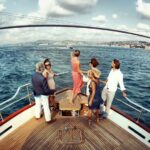
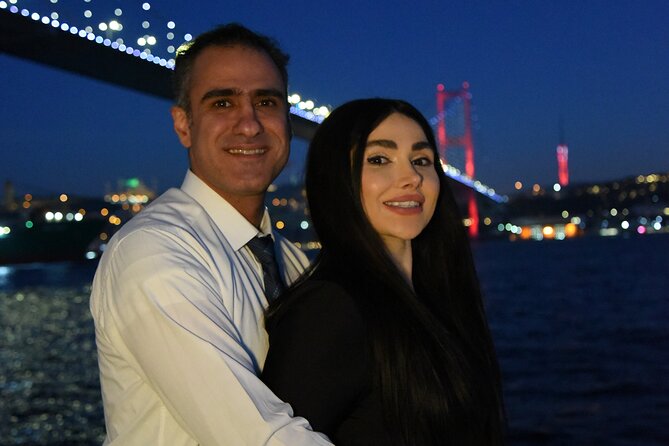
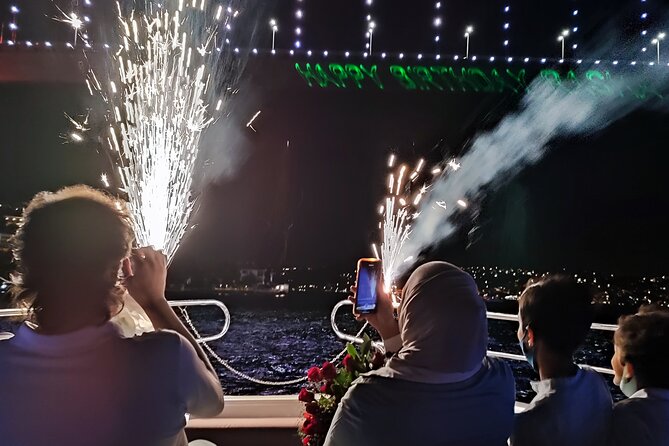
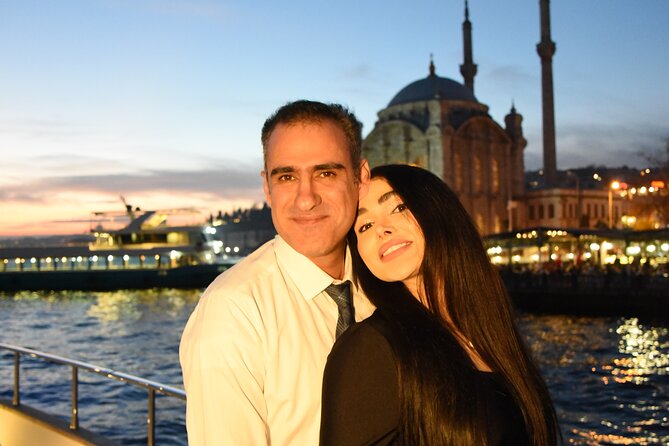
One practical tip: show up a few minutes early. Night schedules have a way of turning “about time” into “late for your spot,” and the cruise timing is the whole point here. Once you’re aboard, the vibe is calm. Multiple people note how smooth the sailing feels and how friendly the crew is, including photo help—so don’t be shy about asking for a couple of shots.
And since the activity ends back at the meeting point, you get a clean loop. No complicated end-of-tour problem-solving.
Bosphorus Strait Highlights: Asia-Europe Views Plus Real Geography
This cruise moves along the Bosphorus, the strait commonly called the Bosphorus (with its historical name Bosporus). It generally stretches in a northeast-southwest direction and splits Istanbul into the European Side and the Anatolian Side. From the water, you understand this in seconds, because the city literally changes character as you pass from one shore to the other.
You also get the “why” behind the Bosphorus being so central to Istanbul. The water connects two major seas, and currents run in opposite directions depending on depth: surface currents move from the Black Sea toward the Sea of Marmara, while underwater currents flow the other way. It’s a small piece of science, but it adds depth—pun intended—to what you’re seeing.
Then there’s the width. It varies because it’s shaped by distance from shore, with the widest point around 3,500 meters. That’s why some stretches feel open and airy, while other stretches feel tight and dramatic. At night, those changes in space make the skyline look different from one minute to the next.
As you glide along, you’ll also pick up domes and minarets in the distance. Even if you’re not doing a full mosque visit, the silhouettes give you a sense of how much of Istanbul’s identity is tied to the waterfront.
Dolmabahçe Palace and Çırağan Palace: Ottoman Grandeur From the Water
Two of the most impressive palace moments on this cruise sit right along the Bosphorus shore.
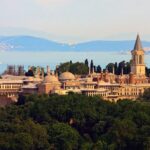
First up is Dolmabahçe Palace, on the Beşiktaş waterfront. The palace sits on an area of about 250,000 square meters near the entrance to the Bosphorus from the Sea of Marmara, facing Üsküdar and Kuzguncuk. What I love about seeing it from a yacht is that you’re not stuck judging scale from a sidewalk. The palace front and the waterfront setting work together, and you can actually sense how powerful this location was when ships used nearby coves to anchor.
Next, you pass Çırağan Palace, commissioned by Sultan Abdulaziz and designed by architect Sarkis Balyan. It’s made of marble and covers about 80,000 square meters. The story is heavy in places: Abdulaziz was imprisoned there after being deposed, and Murat V suffered a similar fate. Later, the palace was used as the House of Parliament after the 1908 constitutional period, then damaged by fire in 1910.
Now it’s a luxury hotel, and that matters for your experience because the palace lights look especially good after dark. You’re not touring inside, but you still get the emotional punch of the architecture and its transformation.
If you like big visual anchors, these two stops are the kind that make a two-hour trip feel long enough.
Ortaköy, the Bosphorus Bridge, and the Night Photo Circuit
Ortaköy is a lively neighborhood on the European side, in Beşiktaş. It has a bazaar area with souvenir shops, cafes, and restaurants, plus a reputation for an “intellectual market.” Even though the bazaar movement is described as starting after 10:00 a.m., the harbor atmosphere is still easy to read from the water at night. You see the waterfront as a social stage rather than just a traffic corridor.
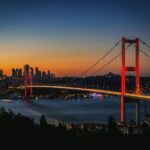
Then come the bridge moments. The Bosphorus Bridge sits at Ortaköy on the European side and Beylerbeyi on the Anatolian side. It was the first bridge built across the strait, started in 1970, and opened on October 29, 1973. In the cruise’s context, it’s a landmark with a double identity: a real transport link and a visual icon.
For photos, bridges at night are easier than you think because the lights do the hard work for you. But the angle matters, and the moving boat solves that. You can catch different bridge sections as you pass, instead of getting one fixed viewpoint from the shore.
One more thing I like: the itinerary’s bridge coverage keeps the city feeling connected. You’re not just seeing pretty buildings; you’re seeing the city’s structure—how people and history move through the same narrow strip of water.

Bebek to Rumeli Hisarı: Mansions and a Fortress Built for War
Bebek is another European-side neighborhood you’ll recognize for its waterfront appeal. It’s historic, and it became a popular residential area during Ottoman times. Today, it’s known for waterside mansions, historical buildings like Bogazici University, and restaurants with Bosphorus views. From the cruise deck, Bebek reads as a calmer contrast to the palace-heavy stretches. The shoreline becomes more intimate—less monumental, more lived-in.
Then you move toward Rumeli Hisarı (Rumeli Fortress), in Sariyer. This is built directly across from the Anadolu Hisarı on the Asian side, and it was positioned at the narrowest point of the Bosphorus. Construction began in 1453 on the order of Sultan Mehmed the Conqueror, and the fortress was completed in only three months. Before the conquest of Istanbul it protected against naval attacks; after the conquest it helped inspect maritime traffic.
What makes it special on a night cruise is the way the fortress becomes an open-air story. After restoration work in 1953, the surrounding area shifted toward culture, with summer concerts, and today it serves as an open-air theater and museum. Even if you’re not going inside, the fortress’s mass and placement across the channel feel dramatic after dark.
If you’re the type who likes cities with tension—beautiful but strategic—Rumeli Hisarı delivers.
Fatih Sultan Mehmet Bridge and Anadolu Hisarı: Two Crossings, One Big Sky
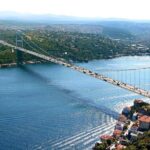
Next, you’ll see the Fatih Sultan Mehmet Bridge, Istanbul’s second bridge over the Bosphorus. Construction began in 1986 and it opened on July 3, 1988. It’s known as the 14th largest steel suspension bridge in the world, and from the water it becomes part of the skyline geometry, not just a piece of infrastructure.
The bridge carries a significant portion of trans-Bosphorus traffic, which is exactly why it feels alive at night. The Bosphorus is a historic waterway, but Istanbul is also a modern city with a lot of motion. This bridge shows both at once.
Across the strait, you also encounter Anadolu Hisarı (Anatolian Fortress) on the Asian side in Beykoz. It was built in 1395 by Beyazit I as a citadel and exterior castle walls, and later it lost strategic importance and was used as a military hospital. Restoration from 1991 to 1993 converted it into a museum, but access is limited: it’s basically an open-air space, and only the outer walls can be visited.
That limitation is fine for this cruise format, because you’re not trying to do a full museum visit here. You’re getting the strategic pairing: Rumeli Hisarı on one side, Anadolu Hisarı on the other. Seeing both from the water helps you understand the Bosphorus as a choke point—without needing a lecture hall.
Küçüksu, Beylerbeyi, and Maiden’s Tower: Palaces Plus Legend
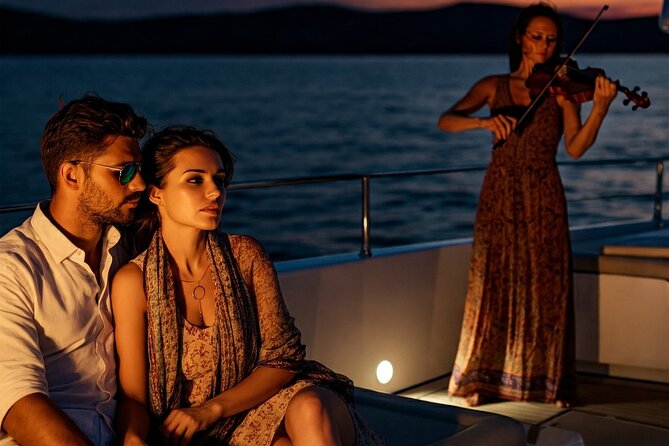
As the cruise continues on the Asian-side stretches, you get more palace-scale scenery.
Küçüksu Palace is a small Ottoman summer palace ordered by Sultan Abdulmecit and designed by Nikogos Balyan. It sits on the Bosphorus coast road between Üsküdar and Beykoz. During Ottoman times, sultans used it for relaxation, and the palace opened as a museum during the Republican period due to the quality of furniture and decorated details. From a boat, it’s less about interior viewing and more about feeling the setting—how carefully the shoreline was chosen.
Then it’s Beylerbeyi Palace, built in the 1860s on the Bosphorus and located right under the Bosphorus bridge. The design is by Sarkis Balyan and blends Renaissance and Baroque elements. The complex includes imperial and Valide Sultan apartments, plus a hamam and multiple rooms. There’s also a lily pond and a large garden, which you can at least appreciate from the waterfront perspective.
Finally, you’ll see Maiden’s Tower (Kız Kulesi), a distinctive tower on a tiny island about 200 meters from Üsküdar. It’s famous for legends, especially the oracle prophecy about a sultan’s daughter dying from a snake bite on her 18th birthday. The tower’s story is the kind that turns a landmark into something personal, and on a guided cruise it lands in a memorable way because you’re watching it in its original dramatic setting—water all around, no hiding.
Galataport and the Modern Port Finish in Karaköy
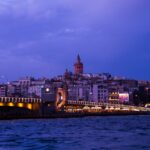
As the cruise winds down, you end back at the meeting point area, with Galataport part of the ending story. Galataport is a modern port and social hub in Karaköy, combining contemporary architecture with Istanbul’s old-city feel.
For visitors, it’s useful because it signals what you’re seeing beyond the Bosphorus itself. You’ve spent the ride in historic surroundings—fortresses, palaces, bridges—but Istanbul doesn’t pause. The modern port area includes restaurants, cafes, shops, and cultural venues, and it includes an underground terminal designed to manage cruise ship traffic.
I like finishing near a place that feels functional and alive, instead of feeling like you’re being dropped off somewhere dead. It makes it easy to continue your evening with a meal or a stroll, if that’s your plan.
Price, Included Drinks/Snacks, and the Two-Hour Pacing Value
At $54.44 per person for about two hours, this isn’t a budget bargain, but it also isn’t a splurge you’ll regret if you plan it right. The value comes from compression: you get sweeping Bosphorus views and major landmarks in one ride, instead of paying for multiple separate transport hops.
What helps the price feel fair is that you’re not just staring at scenery in silence. You get guided interpretation, and the overall tone is relaxed. Multiple people highlight the friendly team, smooth sailing, and that the crew takes nice photos for you. That kind of service is hard to build on your own when you’re juggling a camera and crowds on land.
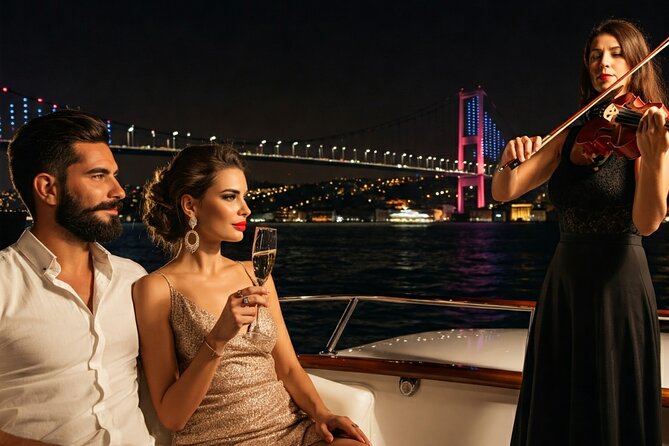
Also, refreshments are part of the deal. Reviews mention drinks, snacks, and some food, which turns the cruise into a proper evening activity rather than a quick ride. If you want to keep your night plans simple, this is the kind of activity that does the heavy lifting.
Pacing is another win. A two-hour format means you’ll see a lot of landmarks without feeling stuck for half your day. The tradeoff is that this is scenic touring, not a deep museum day—so if you want to go inside palaces or fortresses, treat the cruise as your “big picture” start, not the full ticket experience.
Should You Book This Bosphorus Night Cruise?
Book it if you want the most efficient route to seeing Istanbul’s Bosphorus highlights with minimal planning. This is especially strong for first-time visitors who need a quick orientation in a single evening, and for repeat visitors who want a different angle than the usual viewpoints.
Skip it if you’re expecting lengthy stops or interior access to palaces and museums. This is a view-forward cruise, and it shines when you lean into that. Also, plan around weather, because the experience requires good weather and can be rescheduled or refunded if it can’t run.
If you like night views, bridge geometry, and palace silhouettes, this one is a solid choice.
FAQ
How long is the Bosphorus night cruise on the luxury yacht?
It’s approximately 2 hours.
What does it cost per person?
The price is $54.44 per person.
Where does the tour start and does it end nearby?
You meet at Ömer Avni, İskele Yolu No:30, 34427 Beyoğlu/İstanbul, and the activity ends back at the meeting point. It’s listed as near public transportation.
Will I receive a mobile ticket?
Yes, this experience uses a mobile ticket, and confirmation is received at booking time.
Are drinks, snacks, or food included?
Yes. Reviews mention snacks and drinks are provided, and some reviews also mention food.
What if weather is bad or I need to cancel?
The experience requires good weather. If it’s canceled due to poor weather, you’ll be offered a different date or a full refund. Cancellation is free up to 24 hours in advance for a full refund.