REVIEW · ISTANBUL
Bosphorus Explorer: 3-Hour Cruise with Asian Side Visit
Book on Viator →Operated by IMCA TOURISM · Bookable on Viator
Bridges, palaces, and two continents in one glide. This Bosphorus cruise stacks Istanbul highlights into a short ride, with English narration as you pass Ottoman palaces, fortresses, and mosques from the water. I love the clear “see-it-all” layout—Europe, the strait, then back—plus the built-in Asian-side stop so you’re not only viewing the city, you’re actually stepping onto it for photos and a quick wander.
My second favorite part is the sheer variety of landmarks you get in one trip: bridges you sail under, skyline views from the water, and a route that shows how Istanbul grew along the shoreline. The main thing to think about is logistics: boarding has stairs and getting on/off can be a little awkward in choppy weather, so it’s not ideal if you struggle with steps.
In This Review
- Key things I’d zero in on
- Why this Bosphorus ride is such a smart Istanbul starter
- Getting to the meeting point and the “real” boarding situation
- Seats, narration, and what to bring for a comfortable trip
- The Europe-to-Asia route: landmarks you’ll actually notice from the water
- Galata area and Galata Bridge views
- Istanbul Painting Museum and the Mimar Sinan connection
- Dolmabahçe Mosque and Dolmabahçe Palace from the strait
- Ortaköy neighborhood and Ortaköy Mosque
- Rumeli Hisarı fortress: big Ottoman energy
- Under the Bosphorus Bridge: the moment that sells the tour
- Fatih Sultan Mehmet Bridge and the return toward the Asian shore
- Anadolu Hisarı, Küçüksu Pavilion, and Bebek views (mostly from the boat)
- The Asian-side stop: Beylerbeyi and that one-hour reality check
- Maiden’s Tower, Topkapı, Yeni Camii, and Süleymaniye on the return
- Timing: how long it really takes and why wind matters
- Price and value: why $12.09 can still feel like a lot of sightseeing
- Who should book this, and who should skip it
- Should you book Bosphorus Explorer?
- FAQ
- How long is the Bosphorus Explorer cruise?
- Where does the tour start and end?
- Do I get an Asian-side stop?
- Is the tour in English?
- What’s included in the ticket price?
- Is Beylerbeyi Palace admission included?
- Are food and drinks included?
- Is the boat ride accessible for people who have trouble with stairs?
- What if the weather is bad?
Key things I’d zero in on
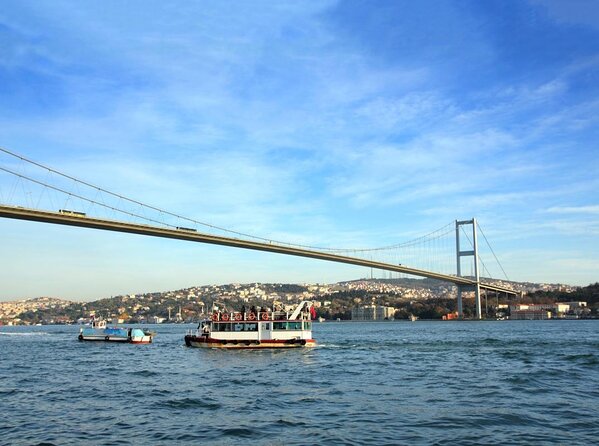
- Under-the-bridge experience: You pass directly under the Bosphorus Bridge, a rare way to feel the strait in motion.
- Two-continent routing: You get European waterfront sights and then a real hour on the Asian shore.
- Stops that are mostly visual: A lot is “see from the boat,” so bring your camera and choose a seat early.
- Short time on the Asian side: You’ll get photos and a brief browse, but it’s not a deep dive into neighborhoods.
- Weather affects timing: Wind and currents can shift the schedule by about ±30 minutes.
- Budget-friendly, all-in price: The ticket is low and includes all fees and taxes, with no hotel pickup required.
Why this Bosphorus ride is such a smart Istanbul starter
If you want one activity that gives you immediate orientation, this is it. You’re not stuck inside one area. Instead, you travel the spine of Istanbul—the Bosphorus Strait—where the city’s different eras sit side by side along the shore.
The value is strong for the price. At about $12.09 per person (with all fees and taxes included), you’re paying for transportation, narration, and a guided sightseeing loop that covers major sights on both sides. You also get flexibility with morning and afternoon departures, which helps you match your day plan.
Just don’t expect this to replace a full-day museum-and-mosque schedule. The payoff here is the big-picture view: you’ll leave knowing where things are, what you want to see in more detail later, and how Istanbul looks from the water.
If you're still narrowing it down, here are other tours in Istanbul we've reviewed.

Getting to the meeting point and the “real” boarding situation
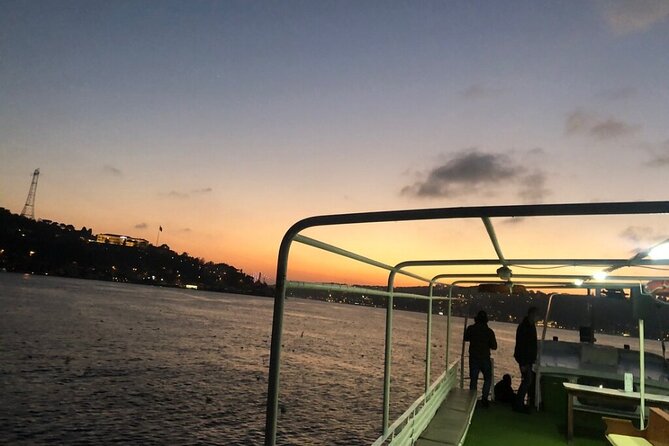
The tour starts and ends at Sarıdemir, Ragıp Gümüşpala Cd. No:36, 34134 Fatih/İstanbul. You’ll go back to the same place at the end, so you don’t need to figure out separate drop-off logistics.
One practical heads-up: there are stairs to board the boat. If you can’t step up and down easily, this is the kind of activity to avoid or to ask about alternatives before you commit. Even when the boat is accessible, on/off can involve a temporary ladder held by crew, and the day’s sea conditions can make that harder.
What I’d do: arrive a bit early, scan for your boat and check that the staff confirm the exact return time for your departure. The ride is usually smooth, but wind can change timing, and you don’t want to be scrambling when you’re supposed to be back on board.
Seats, narration, and what to bring for a comfortable trip
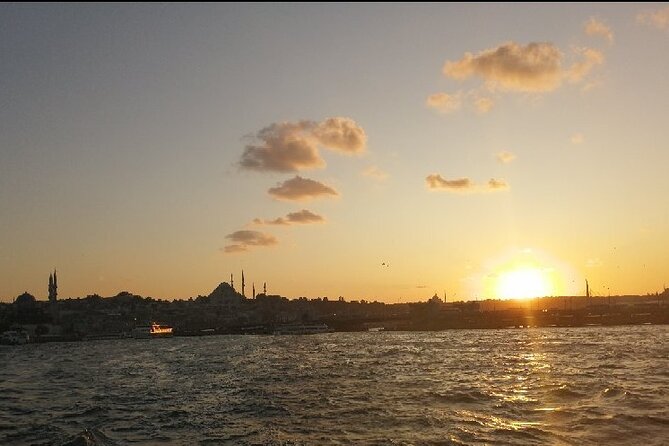
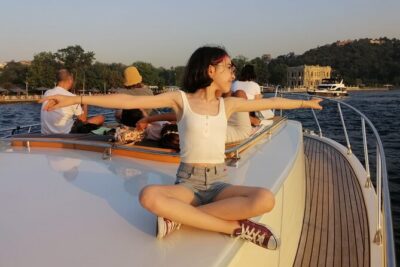
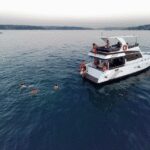
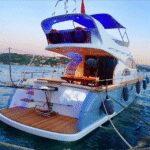
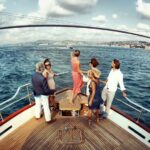
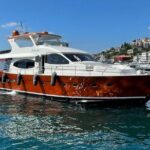
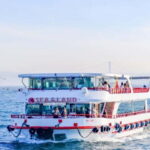
This isn’t a luxury yacht day. It’s a working-style sightseeing boat with simple comforts—enough to relax while you watch the skyline slide by. The group size can reach up to 100 people, so early seating matters if you want a clear view of the landmarks as you pass.
The narration is offered in English (and some operations also include Russian). A few people find the timing and clarity can vary depending on how loud the boat is and how quickly the speaker moves through each landmark. My advice: don’t treat the narration as a replacement for a guidebook. Use it to understand what you’re seeing, then zoom in with your own photos and quick reads later.
Bring:
- A light jacket or wind layer. Bosphorus air can get chilly even when the rest of the city feels warm.
- A phone camera with enough storage for bridge moments.
- Water. Soda/pop beverages aren’t included, and while you may be able to buy drinks or grab snacks onboard, you shouldn’t rely on that as your main meal plan.
- Motion-friendly shoes if the deck feels slick.
Also: service animals are allowed, and the meeting point is near public transportation.
The Europe-to-Asia route: landmarks you’ll actually notice from the water
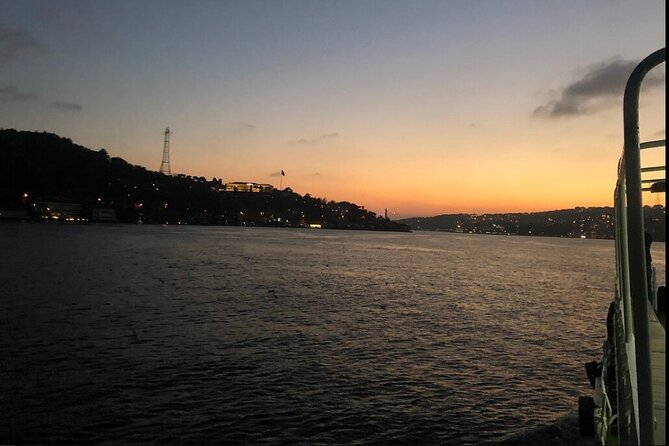
Your day has a rhythm: pass famous waterfront architecture, then hit big “wow” moments where you get close enough to feel the scale.
Galata area and Galata Bridge views
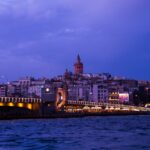
You’ll see the medieval-looking Galata area tower rising over the skyline. From the water, it’s a quick “you’re in the right city” moment because it frames Istanbul’s older silhouette right away.
Then you sail under Galata Bridge, the connection between old Istanbul and the Karaköy side. This is one of the best segments for noticing how Istanbul’s waterfront life works—people fishing, walking along, and the city acting like it’s one long street that happens to sit over water.

Istanbul Painting Museum and the Mimar Sinan connection
As you move along, the Istanbul Painting Museum comes into view from the boat. The building is associated with Mimar Sinan, the legendary Ottoman architect. Even if you don’t step inside on this trip, the exterior and the name link help you place Sinan as a thread in Istanbul’s architectural identity.
Dolmabahçe Mosque and Dolmabahçe Palace from the strait
Next up: Dolmabahçe Mosque and the nearby Dolmabahçe Palace area. These are built to impress from land, but the water angle makes them even more striking. The palace’s European-style features mix with Ottoman artistry, and from the Bosphorus it looks like the city’s power sat right on the waterline.
This is also where I recommend positioning yourself for good photos. Seats can shift during the ride, and you’ll want a clear frame for that “palace against the water” look.
Ortaköy neighborhood and Ortaköy Mosque
As you glide past Ortaköy, keep an eye out for the small, distinctive silhouette of Ortaköy Mosque. It’s right by the water, and the way it sits against the Bosphorus makes it feel almost like it’s floating in the scene—especially when light hits the domes.
Ortaköy is also a practical reminder that the Bosphorus isn’t just monuments. It’s a working waterfront with neighborhoods pressed right up to the water.
Rumeli Hisarı fortress: big Ottoman energy
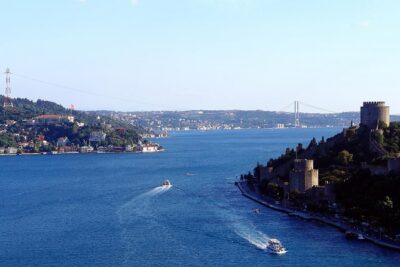
Then comes Rumeli Hisarı (Rumeli Fortress), one of the dramatic passes on the route. Its massive walls and towers look like they’re holding the strait in place. If you’ve ever wondered why Istanbul was such a prize, this is where the answer becomes visual: this place was built for control of the waterway.
Under the Bosphorus Bridge: the moment that sells the tour
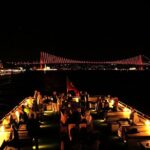
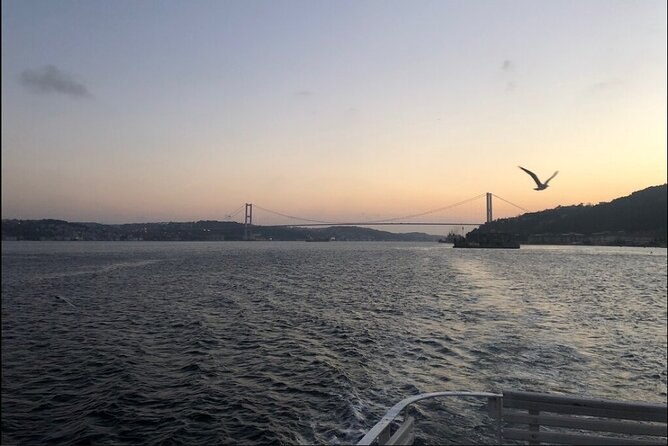
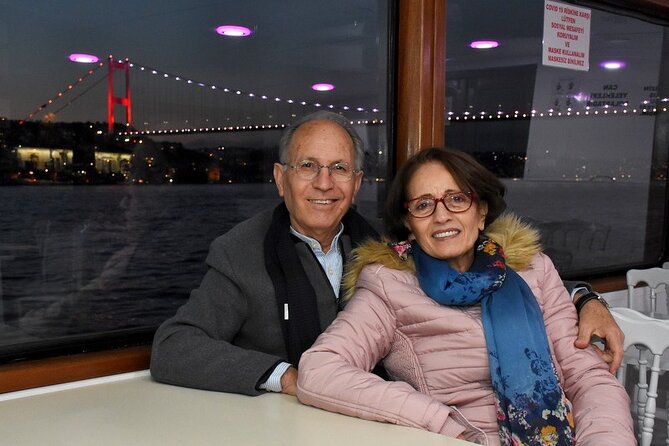
One of the standout experiences is sailing directly under the Bosphorus Bridge. This is more than a photo stop. When you pass under it, you feel the scale immediately—the bridge isn’t background scenery, it becomes part of the motion.
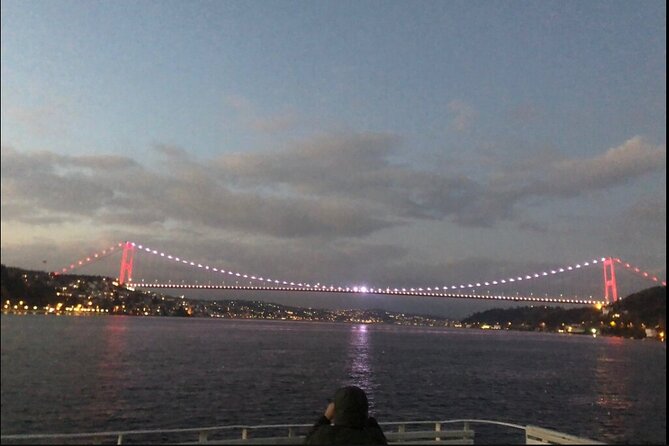
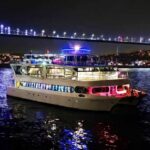
If you’re on a departure that overlaps with evening, the illuminated structure changes the mood fast. The scene turns more cinematic with the dark sky and lights reflecting on the water.
Fatih Sultan Mehmet Bridge and the return toward the Asian shore
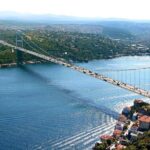
You’ll also pass beneath the Fatih Sultan Mehmet Bridge, named for the conqueror of Istanbul. It’s a modern engineering contrast to the older landmarks around it, and that contrast is part of why the route feels so Istanbul.
This is also a good moment to note how the city keeps switching “styles” as you travel—imperial waterfronts, fortifications, then modern infrastructure.
Anadolu Hisarı, Küçüksu Pavilion, and Bebek views (mostly from the boat)
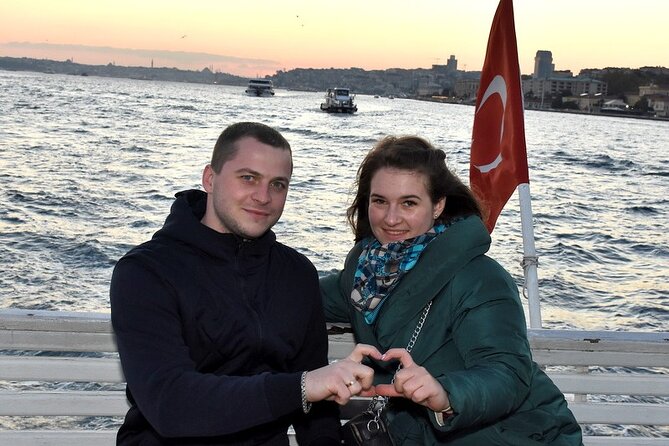
As the cruise approaches the Asian coastline, you’ll see more Ottoman-era silhouettes and shoreline architecture.
Anadolu Hisarı (Anadolu Fortress) is next, an older fortress compared with the Rumeli side. It’s smaller, but from the water it carries a quiet weight—its weathered stone and towers look like they’ve been staring at the strait for centuries.
Then you pass by Küçüksu Pavilion (Küçüksu Kasrı), a smaller imperial retreat style you don’t get to see often from city streets. It’s known for its 19th-century Rococo influence, and from the Bosphorus it reads like a delicate contrast to the larger palaces.
After that, the Bebek shoreline gives you a greener, calmer stretch. You may spot Bebek Khedive Pavilion (Hidiv Kasrı) as you glide by—often partly hidden by surrounding greenery, but still recognizable as an elegant mansion tucked into the scene.
The Asian-side stop: Beylerbeyi and that one-hour reality check
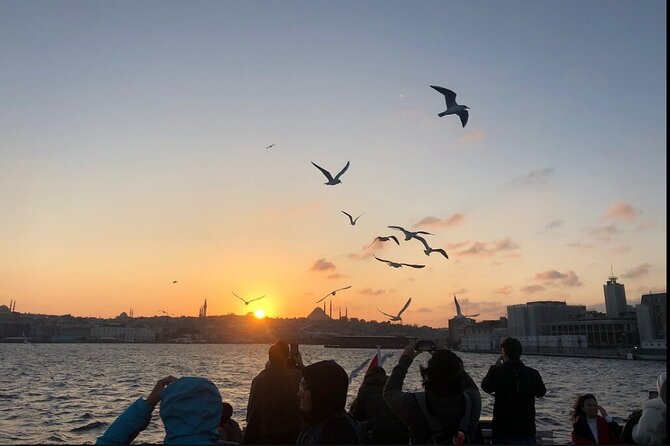
Here’s where your cruise stops being only sightseeing-from-a-deck and becomes a short land break.
On arrival to the Asian side, you get about one hour for photos and exploring. The plan centers around the Beylerbeyi neighborhood, with the option to visit Beylerbeyi Palace if time allows. Admission ticket for the palace isn’t included, so you’ll want to decide whether you’re paying to go in or prioritizing exterior shots and wandering.
A key detail: on night tours, this Beylerbeyi stop may not happen. If you’re booking and timing matters, double-check which departure you picked so you know whether the Asian-side visit is included in your schedule.
Even when the stop is brief, you’re getting something valuable: the chance to take photos from the Asian shoreline with the Bosphorus Bridge overhead. That angle can’t be recreated in the same way from the European deck.
Practical tip: treat the Asian stop like a photo + short walk block. You can shop or grab snacks, but don’t build your expectations around finding a full neighborhood tour in only an hour.
Maiden’s Tower, Topkapı, Yeni Camii, and Süleymaniye on the return
After you re-board, the cruise continues along the peninsula side and adds some of Istanbul’s most recognizable silhouettes.
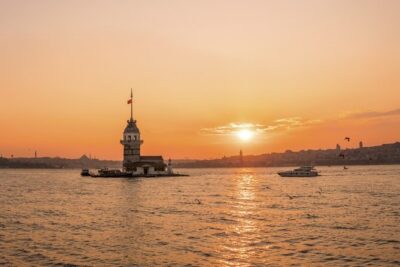
Kız Kulesi (Maiden’s Tower) comes into view near the mouth of the Bosphorus. The tower sits on a tiny islet, so even without getting off the boat, it’s one of the easiest landmarks to spot and photograph as the light changes.
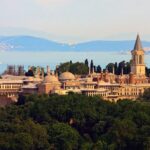
Next, you see Topkapı Palace from the water. It’s the former administrative heart of the Ottoman sultans for centuries, and from the Bosphorus it looks like a whole city-within-a-city stacked along the shoreline.
As you approach Eminönü, Yeni Camii (New Mosque) appears with its domes and minarets, framed by the busy waterfront area. From this angle, you can appreciate how mosque architecture dominates the skyline even when streets are crowded below.
Then the cruise finishes with Süleymaniye Mosque, built by Mimar Sinan. From the water, the scale is hard to ignore. It’s a fitting end because it gives you that “Istanbul’s skyline belongs to architecture” feeling to carry with you after the boat docks.
You may also pass the Kuleli Military High School, a red-brick structure with a castle-like look along the Bosphorus.
Timing: how long it really takes and why wind matters
The tour duration is listed as about 2 to 4 hours, with an average around 3 hours and a possible variation of ±30 minutes due to wind currents. That means you should keep your schedule flexible.
Also, the timing of the Asian-side stop depends on the day’s conditions, and return instructions will matter. If you’re trying to connect to a later dinner reservation, I’d plan for this experience to run a little later than you hope.
Price and value: why $12.09 can still feel like a lot of sightseeing
At $12.09 per person, the best way to think about value is what you avoid. You avoid:
- spending a whole day figuring out ferries and water routes,
- paying for multiple separate tours to cover both sides,
- and missing the biggest “Istanbul from the water” perspectives that are hard to recreate from street level.
This ticket includes all fees and taxes, and you’re not dependent on hotel pickup (which keeps costs down and helps you travel on your own time). What’s not included is hotel pickup/drop-off and soda/pop beverages.
So if you’re on a budget but you still want a guided look at the Bosphorus spine, this is a fair trade.
Who should book this, and who should skip it
Book it if:
- you’re visiting for the first time and want a quick orientation across Europe and Asia,
- you love bridge and waterfront photos,
- you want a relaxing break between busier sightseeing days,
- you’re traveling with limited time but want to see major monuments from a strong vantage point.
Skip it (or ask questions first) if:
- stairs and boarding ladders are a problem for you,
- you only want walking tours with deep stops on land,
- you’re expecting a full Asian neighborhood exploration in only about one hour.
Should you book Bosphorus Explorer?
Yes, if your priority is a fast, affordable way to see the Bosphorus landmarks in one coherent route. The “under-the-bridge” moment plus the short Asian-side stop make it more than a simple sightseeing loop.
I’d book with a realistic mindset: it’s best as an orientation and photo tour, not a detailed museum-and-market replacement. If you want the palace interiors or deeper time on shore, plan a follow-up visit later in your trip.
If you’re happy trading “more time walking” for “more views from the water,” this one fits.
FAQ
How long is the Bosphorus Explorer cruise?
The tour is listed as about 2 to 4 hours, with an average around 3 hours. Wind and currents can shift timing by about ±30 minutes.
Where does the tour start and end?
It starts at Sarıdemir, Ragıp Gümüşpala Cd. No:36, 34134 Fatih/İstanbul, Türkiye and ends back at the same meeting point.
Do I get an Asian-side stop?
Yes. The experience includes a stop on the Asian side of the Bosphorus with about one hour for photos and short exploring, then you return to the boat.
Is the tour in English?
English is offered.
What’s included in the ticket price?
The ticket includes all fees and taxes. Hotel pickup and drop-off are not included.
Is Beylerbeyi Palace admission included?
Admission tickets are not included for the Beylerbeyi Palace stop (you’ll need to pay if you want to enter).
Are food and drinks included?
Soda/pop beverages are not included. You may be able to get drinks or snacks onboard, but you should plan to bring what you need for your comfort.
Is the boat ride accessible for people who have trouble with stairs?
There are stairs to get on the boat, and getting on/off can be tricky. It’s not recommended if you can’t handle steps.
What if the weather is bad?
This experience requires good weather. If it’s canceled due to poor weather, you’ll be offered a different date or a full refund.