REVIEW · ISTANBUL
Bosphorus Dinner Cruise & Live Show – Private Table
Book on Viator →Operated by Travel Inn Turkey · Bookable on Viator
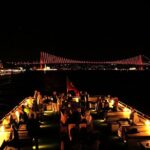
Night in Istanbul comes with a view and dinner. This Bosphorus cruise turns the city lights into part of the show, with a reserved private table, comfortable seating on deck and inside, and a live program featuring the whirling dervish and other traditional dances. I especially like how the dinner is set up to handle dietary needs, and how the staff keep things moving so you can actually enjoy the night instead of waiting around. The main catch to plan for is the shared shuttle pick-up, where small delays can happen because the coach collects people from multiple hotels.
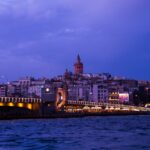
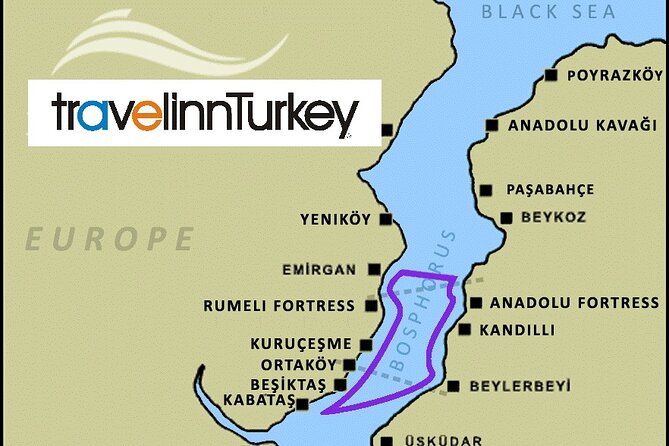
In roughly 3.5 hours, you’ll see a string of famous landmarks after dark: the Bosphorus Bridge linking Europe and Asia, Dolmabahçe Palace, classic Bosphorus neighborhoods like Beşiktaş and Ortaköy, and fortresses and palaces such as Rumeli Hisarı and Beylerbeyi—ending with views near Kız Kulesi (Maiden’s Tower). It’s a good fit when you want history told in plain language, dinner done for you, and the river turned into a moving front-row seat.
In This Review
- Key things I’d plan for
- What You’re Really Buying: Dinner Cruise Energy With Istanbul Night Sights
- Pickup, Timing, and How Not to Miss the Start
- Boat Comfort on the Bosphorus: Recline, Sip, and Watch the Water Move
- The Live Show Lineup: Whirling Dervish and Belly Dance in Real Time
- Dinner With Dietary Needs: What the Setup Feels Like
- Night Istanbul by Coach: Dolmabahçe, Beşiktaş, and Ortaköy After Dark
- Dolmabahçe Palace: Ottoman Power, Early Republic Moment
- Beşiktaş: Where the City Works and Boats Leave
- Ortaköy Under the First Bosphorus Bridge: Tea Houses, Cafes, and Night Energy
- Rumeli Hisarı and Beylerbeyi: Fortresses and Summer Palaces at Bosphorus Scale
- Rumeli Hisarı (Rumeli Castle): Built to Stop Aid and Now Open as an Open-Air Museum
- Beylerbeyi Palace: A Summer Residence for Guests, Diplomacy, and Abdulhamid II
- Kız Kulesi (Maiden’s Tower): The Icon That Anchors the Strait
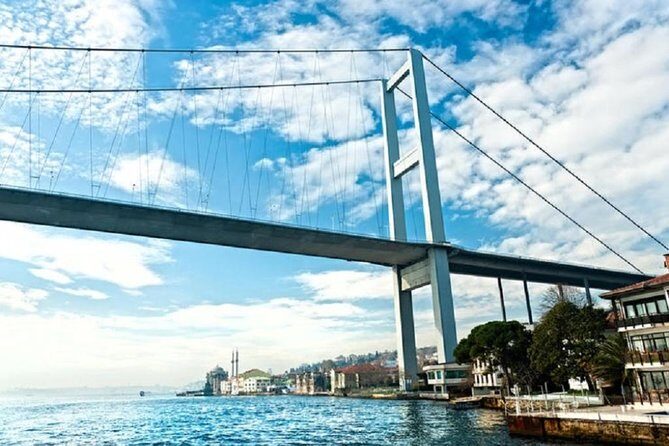
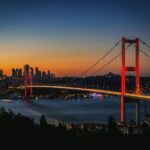
- The Bosphorus Bridge Angle: Europe-Asia Geography You Can Feel
- Who This Cruise Best Suits (and Who Might Be Happier Elsewhere)
- Should You Book the Bosphorus Dinner Cruise With Private Table?
- FAQ
- How long is the Bosphorus Dinner Cruise with live show?
- Where does hotel pickup happen?
- What time is pickup?
- Is the cruise suitable for dietary needs?
- What drinks are included?
- What shows are included?
- What happens if the weather is poor?
- How big is the group?
- Quick final take
Key things I’d plan for
- Private table on the boat: you’re not eating on a random shared bench with half-blind sightlines
- Indoors and outdoors seating: easy switch when the air changes
- Dietary-friendly dinner: you can request needs ahead of time
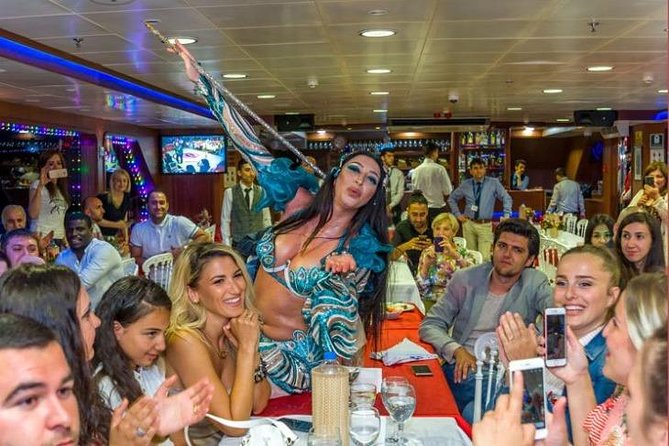
- Live show mix: whirling dervish plus belly dance and folk dancing
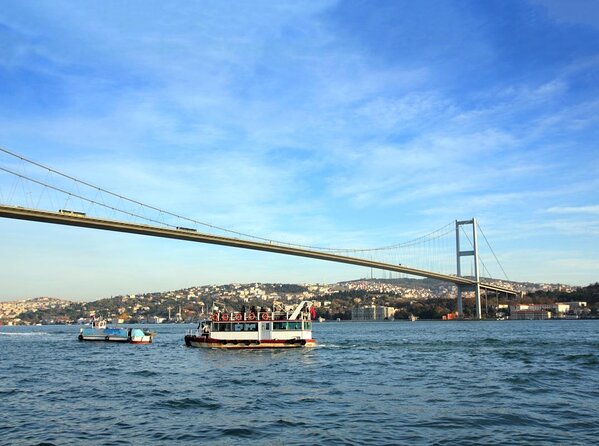
- Bosphorus Bridge and Europe-Asia stops: the night route gives context fast
- Limited alcohol: non-alcoholic is unlimited; alcoholic is capped at 2 drinks per person
What You’re Really Buying: Dinner Cruise Energy With Istanbul Night Sights
This isn’t just a ticket to sit on a boat and eat. You’re buying an evening flow that starts with nighttime views from the European side, then builds toward the water and landmark moments that define the Bosphorus. By the time the show starts, you’ve already gotten your bearings: Europe-Asia geography, Ottoman-era icons, and the Bosphorus coastline explained in the dark.
The “private table” detail matters more than it sounds. Sitting at your own table makes dinner feel like an event, not a cafeteria line. In one of the best moments from a previous sailing, the seating arrangement made it easy to watch the performances without constantly shifting your chair or trying to see over other people.
The other value piece is that the price bundles a lot of the stuff people normally price separately in Istanbul: hotel pickup and drop-off (from Sultanahmet and Taksim areas), dinner, entertainment, and those small fees that add up. If you’re already planning to go out at night anyway, this format is often the simpler way to do it.
If you're still narrowing it down, here are other tours in Istanbul we've reviewed.

Pickup, Timing, and How Not to Miss the Start
The experience typically runs about 3 hours 30 minutes. Pickup happens from central hotels in the Sultanahmet or Taksim area, around 19:15–19:45, with the shuttle leaving the operator’s office at 19:00. Because it’s a shared shuttle collecting multiple hotels, you should expect a little slack time—small 5–15 minute variations are possible.
Here’s the practical strategy: build your evening buffer. If you’re coming from dinner nearby, don’t schedule anything tight right before 19:15. You’ll be happier when you walk into the lobby early, not sprinting with a phone timer.
You’ll also get a mobile ticket, which is great for fewer paper cards and faster check-in. Just keep your phone charged; the Bosphorus night views are the kind you’ll want to capture.
Boat Comfort on the Bosphorus: Recline, Sip, and Watch the Water Move
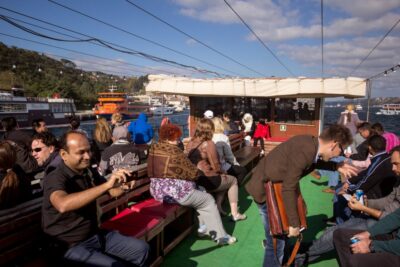
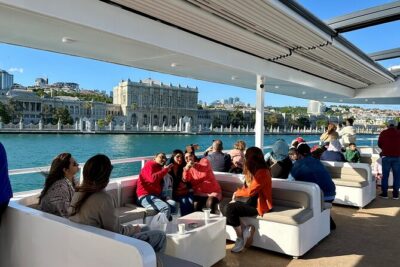
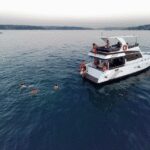
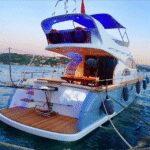
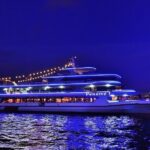
The cruise setup is designed for comfort from the start. You’ll find seating indoors and outdoors, with comfortable spots where you can recline. That matters on a Bosphorus night—weather and wind can change quickly, and switching locations is easier than you’d think.
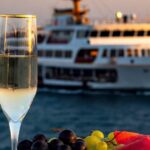
The bar program is clearly set up, and it’s worth understanding before you board. Non-alcoholic drinks are unlimited, while alcoholic drinks are limited to 2 glasses per person. So if you’re the type who hopes for a heavy night of cocktails, this is not the format for that. If you like a glass of wine with dinner, it’s a sensible arrangement.
One thing I appreciate about the way this is described: there’s an open local bar feel, but with a cap. That usually keeps the evening from turning into a chaotic free-for-all and helps the show stay the focus.
A small note that affects planning: photo shoots aren’t included. If you want someone to take staged portraits, you’ll need to arrange that separately.
The Live Show Lineup: Whirling Dervish and Belly Dance in Real Time
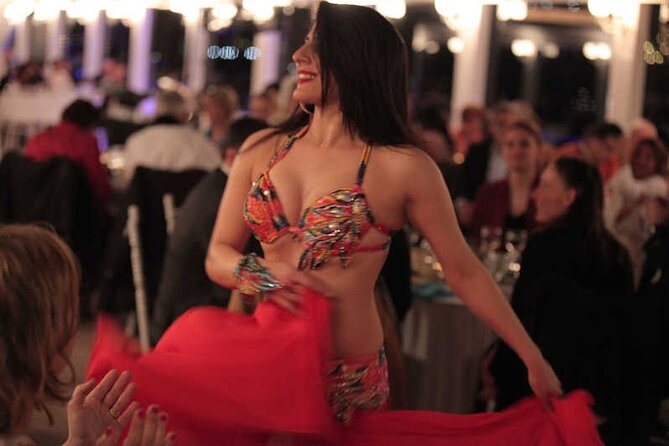
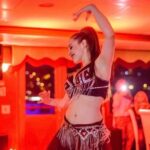
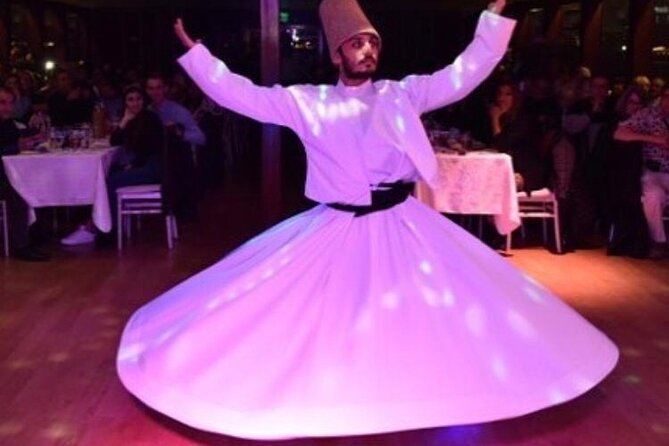
The on-board entertainment is the big reason many people choose this night. Expect a live mix that includes whirling dervish, belly dancing, and folk dancing, plus additional performance segments. The overall style is classic Istanbul stage energy: traditional dance forms, colorful costuming, and a rhythm that keeps you entertained while dinner is happening.
What makes this portion worth your attention is the pacing. You’re not just watching one act and waiting for the next. The show format is designed to keep the evening moving, which is important because the Bosphorus itself is constantly shifting—lights, bridges, coastline, and sea life all change your view as the boat travels.
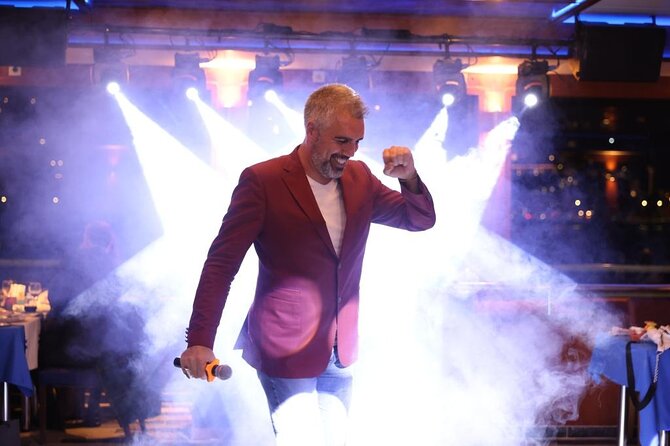
If your departure includes extra music and party energy, you might even notice DJ-style tracks between performances. One New Year’s sailing story highlighted how the DJ and dance floor vibe carried the night beyond the scheduled acts. For a regular night, the live dance program is still the main event, but that extra momentum can show up on special departures.
Dinner With Dietary Needs: What the Setup Feels Like
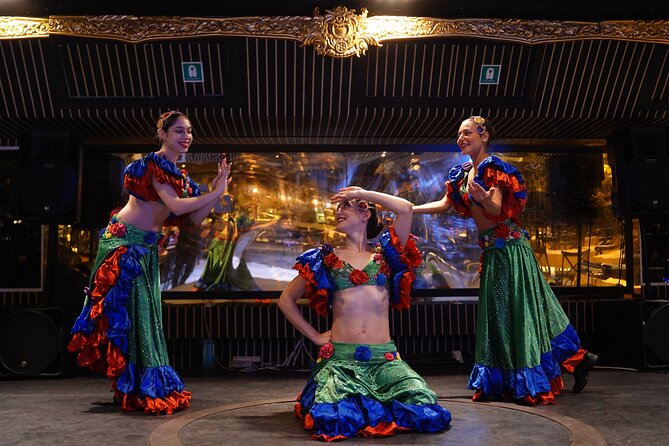
Dinner is included, and it’s specifically noted that the meal can be catered to dietary requirements. That’s a big deal. A Bosphorus cruise is already an expensive-sounding night on paper, so you don’t want to waste it on a plate you can’t eat.
I’d treat this as a planning tip: when you book, communicate your needs clearly. Since catering is offered, the operator likely has a process in place, but you’ll get the best results when you’re specific (for example, allergies or a clear dietary preference).
The dinner setup also affects your show experience. Because the boat has comfortable seating and the service is part of the schedule, you’re not left juggling plates while trying to watch dancers. In previous feedback, the dinner was described as good and plentiful, with attentive staff making sure the table didn’t run dry.
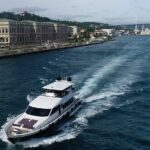
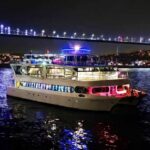
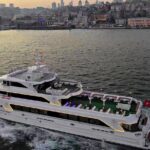
Night Istanbul by Coach: Dolmabahçe, Beşiktaş, and Ortaköy After Dark
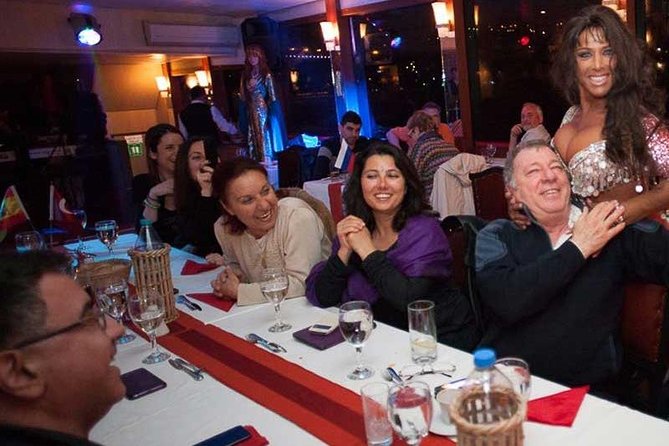
Before you get fully settled on the water, the evening includes several landmark stops. This part is valuable because it turns Istanbul’s name-dropping into something you can actually picture.
Dolmabahçe Palace: Ottoman Power, Early Republic Moment
Dolmabahçe Palace is one of the key stops, and the details really matter. Built between 1848 and 1856, it was commissioned by Sultan Abdulmecid and designed by architect Armenian Garbert Amira Balya. This isn’t just pretty scenery; it’s tied to major turning points.
The palace also holds the story of Mustafa Kemal Atatürk. He died there on November 10, 1938, and later the palace became a museum in 1952. When you hear that at night, it adds weight to the lights and architecture. You’re not just seeing a building—you’re seeing a place where the Ottoman-to-republic transition echoes.
One caution: depending on timing, you may have limited time at each stop. In that case, don’t expect a long inside visit. Plan to enjoy the exterior atmosphere and any brief photo or orientation time you’re given.
Beşiktaş: Where the City Works and Boats Leave
Beşiktaş is older and more layered than it looks from afar. It’s on the European side, known as a center with both residential and commercial life—especially for smaller businesses. You’ll also notice it’s a practical transit hub: major bus and dolmuş terminals and a sea hub for boats heading to various Asian-side neighborhoods.
Why this matters on your cruise night: it grounds the evening. You see that the Bosphorus isn’t only for postcards. It’s also daily life—commuting, local commerce, and a working shoreline.
Ortaköy Under the First Bosphorus Bridge: Tea Houses, Cafes, and Night Energy
Ortaköy is a favorite kind of stop because it’s both scenic and human-sized. It sits in Beşiktaş near the water, right under the first Bosphorus bridge. Even the name has history: in Turkish, Ortaköy means middle village, tied to its position in the strait during the Ottoman period when it was a fishing village and a resort for dignitaries.
In practice, Ortaköy gives you the most “just wander” feeling of the evening stops. There are tea houses and cafes near the water, and you’ll find alleys and small shops. It can get lively on weekends, and in summer you may even see small concerts or street shows. If you want a quick dose of local night vibe before the formal dinner, this is often the stop that delivers.
Rumeli Hisarı and Beylerbeyi: Fortresses and Summer Palaces at Bosphorus Scale
The itinerary also leans into the Bosphorus’ military and royal sides. That pairing works well because Istanbul’s story isn’t just art and mosques—it’s control of the strait.
Rumeli Hisarı (Rumeli Castle): Built to Stop Aid and Now Open as an Open-Air Museum
Rumeli Hisarı dates to 1452, built by Ottoman Sultan Mehmed II (Mehmed the Conqueror) in preparation for the conquest of Constantinople. The location is strategic: it sits on the shore at the narrowest part of the Bosphorus, around 660 meters wide.
It faces Anadolu Hisarı on the opposite shore, built in 1394 by Bayezid I. Together, these fortresses were meant to prevent military and economic aid to the Byzantines coming from the north via the Black Sea—so yes, you’re seeing architecture shaped by geography and politics. The name Rumeli Hisarı was also associated with Boğazkesen, meaning strait cutter.
The structure includes three large towers, one small tower, and thirteen smaller towers (not a random list—this is what gives the fortress its rhythm). After the conquest in 1453, it lost military importance and became a customs checkpoint, then later a prison. Eventually, the castle became a public open-air museum in 1960.
At night, fortress stops have an advantage: you can appreciate scale even without long time inside. The Bosphorus lighting turns stone and tower shapes into silhouettes.
Beylerbeyi Palace: A Summer Residence for Guests, Diplomacy, and Abdulhamid II
Next up is Beylerbeyi Palace on the Asian shore. This palace served as a summer residence for the sultans, ordered by Sultan Abdulaziz and built between 1861 and 1865. Architects Sarkis Balyan and Agop Balyan (both of Armenian origin) designed it in French neo-baroque style, but with a traditional Ottoman house plan.
One of the most interesting parts of the story is who stayed here. During summer months, it hosted foreign guests including the Prince of Serbia, King Nicholas of Montenegro, Emperor Joseph of Austro-Hungary, Shah Nasireddin of Iran, Prince Oscar of Sweden, and Empress Eugenie of France. Hearing those names on a Bosphorus night turns the palace into a diplomacy stage, not just a museum building.
The palace also connects to the final years of Abdulhamid II, who spent his last six years of life here and died in 1918. Winter rule belonged more to Dolmabahçe; summer living was here for the climate.
The layout is also historically specific: there’s a men’s section (Selamlik) and a women’s section (Harem) with separate entrances, plus six large halls and 24 rooms over two floors.
If you want to understand Ottoman life beyond stereotypes, this palace stop gives you that “how power actually functioned” feeling.
Kız Kulesi (Maiden’s Tower): The Icon That Anchors the Strait
Kız Kulesi, also known in English as Maiden’s Tower, sits on a small natural islet off the Asian shore near Üsküdar. It’s one of those Istanbul images people recognize before they can place the exact location.
The history is layered. The first tower here was built in the 5th century by an Athenian commander to control ships passing the Bosphorus and collect taxes. In Byzantine times, a chain was stretched from the tower to the historic peninsula, continuing its control function. Later in Ottoman times, it was used as a lighthouse.
Even without a long visit, the island setting makes it feel magical at night—because the Bosphorus becomes the frame. Your guide’s explanation of taxes, chains, and navigation adds meaning to what you’re seeing as a simple tower on the water.
The Bosphorus Bridge Angle: Europe-Asia Geography You Can Feel
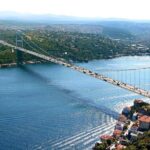
The Bosphorus Bridge stop is described as one of two suspension bridges joining Europe to Asia. That sounds basic, but on this route it becomes a quick geography lesson you can actually remember.
When you see a bridge at night after stops like Dolmabahçe and Ortaköy, you connect the dots between city landmarks and the strait’s role as a connector. It’s also a reminder that Istanbul isn’t split into two separate worlds. The city’s identity is the seam.
This is also where the cruise format helps. You’ll understand why people treat the Bosphorus as a single living corridor instead of separate sightseeing zones.
Who This Cruise Best Suits (and Who Might Be Happier Elsewhere)
This experience is ideal if you want:
- a night plan with food and a show included
- Bosphorus sightseeing that’s not just walking-only
- comfort (indoors and outdoors seating) with a reserved table setup
- a program featuring whirling dervish, belly dancing, and folk dance
It may be less ideal if:
- you want an all-night bar with no drink limits (alcohol is capped)
- you prefer fully independent touring with long stays at museums or interiors (some stops may be shorter)
It also helps to enjoy city night lighting. If you love skyline views and the feeling of Istanbul at night, this route fits your vibe.
Should You Book the Bosphorus Dinner Cruise With Private Table?
If you want an efficient, comfortable night in Istanbul with dinner handled for you and a strong live performance lineup, I think this is a smart book. The best part is the combination: you get landmark storytelling by coach, then you get a comfortable seat on the water for dinner and dance. For the price, the value comes from the package nature—pickup, dinner, show, and drink structure are built in.
Book it especially if you’re traveling with someone and you want the evening to feel special without extra planning. Just go in knowing the shuttle is shared, alcohol has a set limit, and your stop times may be brief at certain landmarks—so you’re enjoying the night, not trying to accomplish every museum in one evening.
FAQ
How long is the Bosphorus Dinner Cruise with live show?
It runs about 3 hours 30 minutes (approximately).
Where does hotel pickup happen?
Pickup is offered from centrally located hotels in Istanbul’s Sultanahmet and Taksim areas.
What time is pickup?
Pickup is around 19:15–19:45, and the shuttle from the office departs at 19:00.
Is the cruise suitable for dietary needs?
Dinner can be catered to dietary requirements, and you can indicate your preference for an alcoholic or non-alcoholic menu.
What drinks are included?
Non-alcoholic drinks are unlimited. Alcoholic drinks are limited to 2 glasses per person.
What shows are included?
The included entertainment features whirling dervish, belly dancing, folk dancing, and more.
What happens if the weather is poor?
The experience requires good weather. If it’s canceled due to poor weather, you’ll be offered a different date or a full refund.
How big is the group?
The tour has a maximum of 120 travelers.
Quick final take
If you’re aiming for one great, low-effort Istanbul night—dinner, Bosphorus views, and a real live dance show—this private table cruise is a strong choice. Just manage expectations on shared shuttle timing and the alcohol limit, and you’ll likely have the kind of evening you remember long after the lights fade.